


Fanless Gaming PC Build: Why This Silent 9800X3D Beast Is Both Genius and Problematic
A completely silent gaming PC with zero fans just dropped, and I'm honestly torn between calling it brilliant or completely bonkers. Billet Labs in London just built a passive water-cooled monster using the new 9800X3D and RTX 5080, relying purely on convection and a triple-radiator chimney setup. No fans. No noise. Just pure physics trying to keep 400+ watts of gaming hardware cool.
And spoiler alert: physics is struggling.
The Convection Chimney Design That's Breaking My Brain
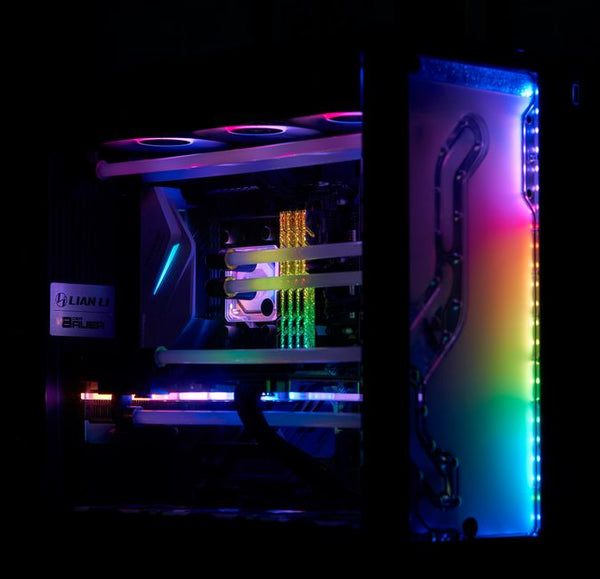
This isn't your typical AIO cooler situation. Billet Labs went full mad scientist and created a vertical chimney using three massive radiators stacked on top of each other. Hot coolant rises through copper pipes, hits the radiators, cools down, and sinks back down. It's basically a giant thermosiphon that would make your physics teacher proud.
The theory? Hot air naturally rises, creating airflow through the radiators without any mechanical assistance. The execution? A towering beast that looks like someone crossed a gaming PC with a Victorian-era heating system.
Ngl, the engineering is impressive. The copper work alone probably cost more than most people's entire gaming builds. But here's where reality hits harder than a wallbang in CS2.
Temperature Reality Check
The 9800X3D is already a hot chip under normal circumstances. Add an RTX 5080 pushing serious watts, and you're asking convection to handle what would challenge even decent fan cooling. Spoiler: it's not going well.
Temps are hitting concerning levels during gaming loads. We're talking potential thermal throttling territory, which means your expensive silicon is literally slowing itself down to avoid cooking. That's the opposite of what you want in a gaming build.
Why Silent PC Gaming Hardware Is So Damn Hard
Look, I get the appeal. Dead silent gaming sounds like paradise, especially if you're streaming or recording content. But there's a reason every serious gaming build uses fans – they work.
Modern PC components are designed around active cooling. The 9800X3D can pull 120+ watts under heavy gaming loads. The RTX 5080? We're probably looking at 250-300 watts during intense sessions. That's nearly 400 watts of heat that needs to go somewhere, and convection alone just isn't cutting it.
When I was helping a customer at our shop here in Orange, TX last week configure their build, they asked about silent cooling options. Honestly? The best compromise is still high-quality fans running at low RPMs. You get 90% of the silence with actual thermal performance.
The Copper Problem Nobody's Talking About
The all-copper construction looks stunning but creates its own issues. Copper conducts heat incredibly well, but it's also heavy as hell and expensive. This build probably weighs enough to qualify as furniture.
Plus, copper requires constant maintenance to prevent oxidation. That beautiful shine? It's going green without regular polishing. Not exactly low-maintenance gaming.
Real-World Gaming Performance: The Brutal Truth
Here's what really matters: can you actually game on this thing? The answer is complicated.
Light gaming? Probably fine. Indie games, older titles, anything that doesn't push both CPU and GPU hard simultaneously. But try running Cyberpunk 2077 with path tracing or the latest Call of Duty at max settings? You're looking at thermal throttling city.
Thermal throttling kills gaming performance harder than high ping. Your fancy 9800X3D starts running like a mid-range chip. Your RTX 5080 drops clocks to stay cool. Suddenly your premium hardware performs like budget components.
Hot take: I'd rather have a slightly audible PC that maintains peak performance than a silent one that can't handle demanding games. Frame drops are more annoying than fan noise.
The Latency Concern
Something most reviews aren't mentioning: thermal throttling affects input latency. When your CPU starts dropping clocks to manage temps, your minimum frame times suffer. That translates to less consistent input response, which is death in competitive gaming.
If you're playing Valorant or CS2 at a competitive level, thermal consistency matters more than silence. A good fan curve beats passive cooling every time for maintaining steady performance.
Where This Build Actually Makes Sense
Don't get me wrong – this isn't completely useless. There are specific scenarios where passive cooling could work.
Content creation workstations where noise ruins audio recordings. Home theater PCs running in living rooms. Maybe productivity builds that rarely hit full load. But gaming? Especially modern AAA gaming? It's a tough sell.
The technology is fascinating though. Billet Labs proved passive cooling can handle serious hardware, just not at full performance. It's more proof of concept than practical gaming solution.
Cost vs Performance Reality
Let's talk money. This custom cooling solution probably costs more than most people's entire gaming builds. You could build a seriously powerful traditional system with the money spent on custom copper work and specialized radiators.
For reference, you could grab a BitCrate Custom Gaming PC with similar specs plus proper cooling for significantly less. Sometimes the tried-and-true approach just makes more sense.
The Future of Silent Gaming
Personally, I think this build represents an important stepping stone rather than a final destination. The engineering insights from passive cooling experiments like this will eventually improve traditional cooling solutions.
Maybe we'll see hybrid systems that use passive cooling for idle/light loads and kick in fans only when needed. Or better heat dissipation materials that make passive cooling more viable.
But right now? If you want a quiet gaming PC, invest in quality fans with good curves, sound dampening materials, and proper case airflow. You'll get 95% of the silence with 100% of the performance.
The Billet Labs build is undeniably cool engineering, but it's solving a problem most gamers don't actually have. Most of us can live with some fan noise if it means our RTX 5080 can actually stretch its legs without thermal limits.
Sometimes the most innovative solution isn't the most practical one. This passive cooling chimney proves that physics has limits, and those limits don't care how much copper you throw at them. Until someone figures out how to beat thermodynamics, I'm sticking with fans.

































Leave a Comment