


The Intel 8086: How a "Temporary" CPU Shaped Every Gaming PC Build Today
June 8th, 1978. Intel drops the 8086. Not exactly the flashy GPU launch events we're used to today, but this 16-bit chip literally created the foundation for every gaming PC build you'll ever touch. Crazy part? Intel designed it as a temporary substitute while they worked on their "real" project — the iAPX 432.
Plot twist: the temporary solution became the permanent architecture that's still powering your RTX 4090 rig today.
Why the 8086 Matters for Modern Gaming PC Builds
Look, I get it. You're probably thinking "Jordan, why should I care about some ancient CPU when I'm trying to squeeze every frame out of CS2?" Fair question. But understanding where x86 came from explains why your custom gaming PC works the way it does — and why Intel and AMD are still fighting over the same basic architecture 45 years later.
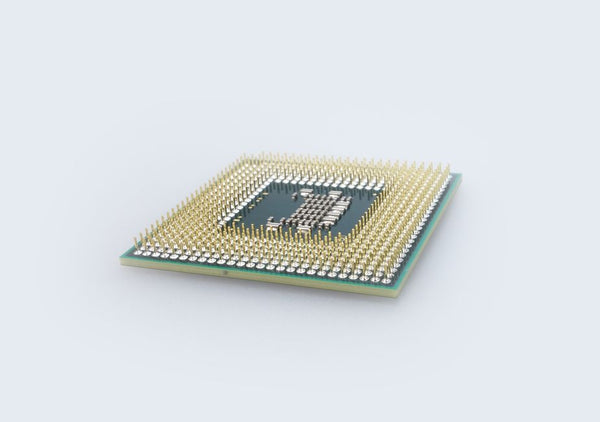
The 8086 introduced the x86 instruction set. Every Intel Core i9-13900K, every AMD Ryzen 7800X3D, every budget Ryzen 5 you'd recommend to a friend — they're all speaking the same basic language that Intel accidentally created in 1978.
When I'm working with customers at TieredUp Tech here in Orange, TX, explaining compatibility between different generations of CPUs, it all traces back to this moment. Your motherboard BIOS, your Windows installation, your game executables — they're all built around x86 compatibility.
The Architecture That Refuses to Die
Intel thought they were buying time. The iAPX 432 was supposed to be revolutionary — object-oriented at the hardware level, built-in memory protection, the works. Sounds impressive, right? Problem was, it was also incredibly slow and arrived way too late.
Meanwhile, the "quick fix" 8086 was fast enough. Simple enough. And most importantly — it shipped on time.
The IBM PC launched with an 8088 (basically an 8086 with an 8-bit bus to cut costs). Boom. MS-DOS. Software ecosystem. Game over for the competition. Every PC game you've ever played owes its existence to this decision tree.
Performance Legacy: From 5MHz to 5GHz Gaming Monsters
The original 8086 ran at 5-10MHz. Your current gaming rig? Probably hitting 5GHz on boost clocks. That's a 500-1000x frequency improvement, not counting the massive architectural advances.
But here's what blows my mind: the fundamental memory addressing, the way instructions flow through the pipeline, the basic register structure — it's all evolved from that 1978 design. Intel's been iterating on the same homework assignment for nearly half a century.
Why This Matters for Your Frame Rates
Modern x86 processors are basically extremely sophisticated translation layers. Your CPU takes those x86 instructions and converts them internally into micro-operations that can run on completely different internal architectures. It's like having a really smart interpreter that makes your 1978 language work on 2024 hardware.
This is why we can still run DOS games through compatibility layers. Why your Steam library from 2005 still works. Why you don't need to rebuy every game when you upgrade CPUs.
Honestly, it's kind of miraculous that it works as well as it does. AMD's X3D cache technology? Intel's P-cores and E-cores? They're all optimizations built on top of this ancient foundation.
Custom Gaming PC Evolution: Standing on Giant Shoulders
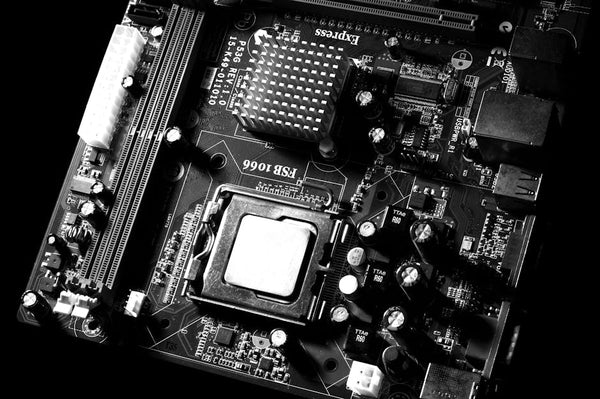
Every time you're researching motherboard compatibility for your next build, you're dealing with x86 legacy decisions. Why do we still have interrupts? Why does your BIOS need to switch from 16-bit to 32-bit to 64-bit mode during boot? Why can your modern CPU still run ancient assembly code?
Because Intel needed a quick solution in 1978.
The backward compatibility obsession that started with the 8086 is both a blessing and a curse. Blessing because your software ecosystem is massive and stable. Curse because we're dragging around 45 years of architectural baggage.
"The 8086 was Intel's reluctant masterpiece — designed as a stopgap but became the foundation of personal computing."
What Would Gaming Look Like Without x86?
Imagine if Intel had scrapped the 8086 and pushed forward with iAPX 432. Or if Motorola's 68000 series had won the IBM contract instead. We might be living in a completely different computing world.
ARM processors are already creeping into laptops and even some desktop applications. Apple's M-series chips prove you don't need x86 for high-performance computing. But gaming? We're still locked into x86 because that's where all the games are.
Hot take: we're probably stuck with x86 for gaming for at least another decade. Too much software, too much legacy code, too many developers who know how to optimize for this architecture. The switching costs are insane.
Building on 45 Years of "Good Enough"
When you're spec'ing out components for a custom gaming PC build, you're working within constraints that trace back to 1978. PCIe slots, memory controllers, instruction scheduling — it's all evolved from Intel's temporary solution.
The 8086 taught the industry that "good enough, shipping now" often beats "perfect, shipping eventually." How many revolutionary CPU architectures have we seen come and go while x86 just keeps chugging along?
Personally, I think there's something beautiful about that persistence. Your Ryzen 7800X3D can trace its lineage directly back to that first 8086. Same basic instruction set, same memory model, just with about a million optimizations layered on top.
The Real Legacy
Ngl, the most impressive thing about the 8086 isn't the technical specs. It's that Intel accidentally created a platform stable enough to build an entire industry on top of.
Every PC build guide you've ever read assumes x86 compatibility. Every benchmark comparison, every overclocking guide, every frame rate optimization — we're all working within the architectural choices Intel made when they needed a quick fix for their delayed flagship project.
The 8086 proves that sometimes the most important innovations aren't the flashiest ones. Sometimes they're just the ones that show up on time and work well enough that nobody wants to replace them.
Forty-six years later, we're still building gaming rigs on Intel's "temporary" foundation. That's not just engineering success — that's accidentally creating the future of computing while trying to solve a completely different problem.
And honestly? That's pretty wild when you think about it during your next CPU shopping session.













Leave a Comment