


This Credit Card Computer with eInk Screen is Gaming Tech News That'll Blow Your Mind
Okay, so I'm scrolling through GitHub the other day, and I stumble across this absolute unit of a project called the Muxcard. Wait, what? A fully working computer that's literally credit card sized? And it's only 1mm thick? My first thought was "this has to be fake" but ngl, the more I dug into it, the more my mind was blown.
The Muxcard isn't just some concept render or vaporware project. We're talking about a real prototype powered by an ESP32-C3 microcontroller with an actual eInk display slapped on top. Yeah, you read that right — a computer thin enough to slip into your wallet next to your actual credit cards.
What Makes This Gaming Technology Actually Matter
Look, I get it. Another tiny computer project hits GitHub every week. But this one's different. The ESP32-C3 isn't some toy chip — it's a legitimate microcontroller that can handle WiFi, Bluetooth, and enough processing power to run simple games and applications. I've worked with ESP32 boards before when customizing setups for customers here at our shop, and they're surprisingly capable little beasts.
The eInk screen is where things get spicy though. Most people think eInk = boring e-reader displays, but that's old-school thinking. Modern eInk can refresh fast enough for basic gaming applications, and the power consumption is basically zero when the image isn't changing. Imagine having Pong or Snake running on something thinner than your credit card.
Real-World Performance Expectations
Let's be real here. You're not running Valorant on this thing. The ESP32-C3 runs at 160MHz with 400KB of SRAM — that's roughly equivalent to computing power from the early 1990s. But here's the thing: early 90s gaming was actually pretty solid. We're talking Tetris, simple platformers, maybe even basic roguelikes.
Personally, I think the latency characteristics could be interesting for certain applications. EInk displays have virtually no input lag once they start refreshing, unlike traditional LCDs with their response time penalties. Could this make for surprisingly responsive retro gaming? Maybe.
The GitHub Project Details That Matter
Diving into the actual project specs, the creator managed to pack everything into a standard credit card form factor: 85.6mm × 53.98mm × 1mm. That's legitimately impressive engineering. The ESP32-C3 handles all the heavy lifting while the eInk display provides a surprisingly readable interface.
What caught my attention was the power management. The whole system can supposedly run for weeks on a tiny battery because eInk only draws power during screen updates. Between gaming sessions, it's basically in hibernation mode. That's actually genius for portable gaming applications.
"A fully working computer that is literally the size of a credit card" — and it actually works.
Gaming Applications Nobody's Talking About
Hot take: this could revolutionize portable gaming in ways nobody's expecting. Think about it — you could literally carry a dozen different games in your wallet. Each card could be programmed with different retro games or applications. It's like having a Game Boy that's thinner than paper.
The modding potential is insane too. Custom firmware could turn these into anything from password managers to cryptocurrency wallets to miniature IoT controllers. I'm already imagining loading one up with classic arcade games for those boring waiting room situations.
Why This Gaming Tech News Actually Matters for Gamers
Here's where I might lose some of you, but hear me out. This isn't just about having another gadget to play with. The Muxcard represents a shift toward ultra-portable computing that could impact how we think about gaming peripherals and accessories.
Imagine custom macro cards for your gaming setup. Program complex key combinations or game-specific commands onto these credit card computers, then just tap your card to your main rig to load profiles. The possibilities are honestly pretty wild when you start thinking outside the box.
The ESP32-C3's WiFi capabilities mean these cards could communicate with your main gaming setup wirelessly. Real-time stats displays, system monitoring, even simple remote controls for streaming setups. It's like having a physical widget system for your gaming environment.
The Reality Check
Okay, let me pump the brakes a bit. This is still very much a prototype project on GitHub. You can't order one on Amazon tomorrow, and there's no telling if it'll ever reach commercial production. The eInk refresh rates are still pretty slow for anything requiring quick reactions, and programming these things requires actual development skills.
But honestly? That just makes it more interesting. This is grassroots innovation at its finest — someone saw a problem (computers are too thick) and engineered a solution that actually works. Whether it becomes mainstream is almost beside the point.
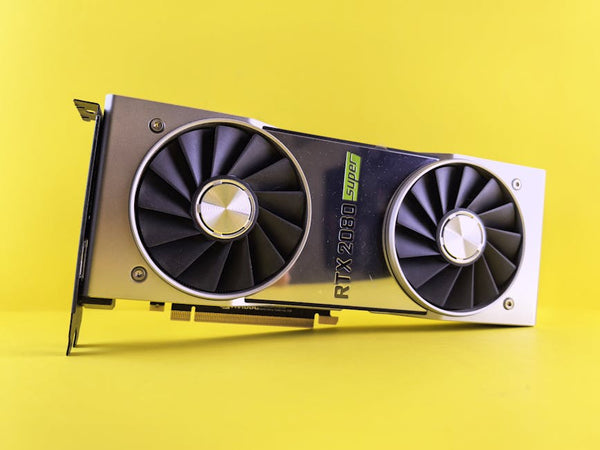
The gaming industry needs more projects like this. Weird experiments that push boundaries and make us question what's possible. Sure, most gamers are focused on getting the highest frame rates and lowest latency from their RTX 4090 builds. But sometimes the most interesting tech innovations come from completely unexpected directions.
Will the Muxcard change gaming forever? Probably not. But will it inspire the next generation of ultra-portable gaming devices? That's a bet I'd take. Sometimes the most revolutionary gaming technology starts with someone building something impossible in their garage — or in this case, something impossibly thin.














Leave a Comment