


Military 3D Printing Tech That Makes Gaming PC Build Planning Look Simple
So the Pentagon wants to 3D print boats out of volcanic fiber now? Bro, we're living in the future. While they're out here replacing 6,545-mile supply chains with forward-deployed printers that can pump out 25,000 vessels a year, I'm sitting here thinking about how this tech mirrors what we deal with in gaming PC build planning every damn day.
Look, I've been building rigs for over a decade, and the parallels between military logistics and custom gaming PC supply chains are wild. Both involve complex component sourcing, manufacturing bottlenecks, and the constant struggle between performance and cost.
Why Pentagon Logistics Reminds Me of GPU Shortages
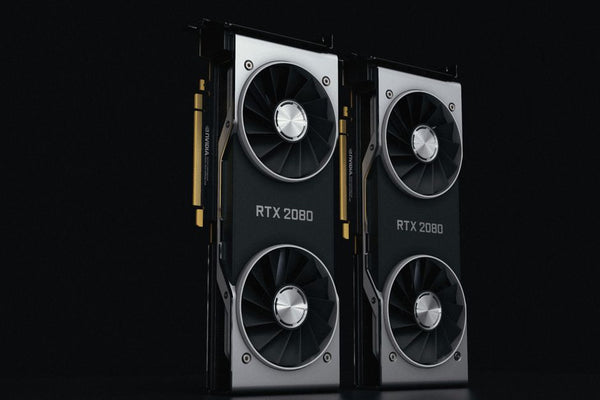
Voltage Vessels claims they can forward deploy 3D printers and crank out 15,000 metric tons of boat hulls annually. That's insane scale. But you know what's equally insane? Trying to source RTX 4090s during a crypto boom.
The military's 6,545-mile supply chain problem sounds familiar, doesn't it? Remember when TSMC fab delays meant waiting 8 months for a decent CPU? Same energy. The Pentagon realized what we learned during the pandemic: long supply chains are fragile as hell.
These volcanic fiber hulls are non-conductive, giving stealth capabilities. That's like how I explain to customers why spending extra on quality PSU shielding matters - electromagnetic interference is real, whether you're dodging radar or preventing coil whine.
Forward Deployment vs Local PC Building
Here's where it gets interesting for us PC nerds. The military wants to build boats where they need them instead of shipping from halfway across the globe. Sound familiar?
Last month at our shop here in Orange, TX, a customer asked why he couldn't just order everything online instead of working with us locally. Simple answer: when your $3,000 custom gaming PC has issues, you want someone nearby who actually knows what they're doing.
The Pentagon gets this now. Why wait weeks for replacement parts when you can manufacture them on-demand?
3D Printing Scale That Would Make Gamers Drool
25,000 boats per year at forward bases. Jesus. That's roughly 68 boats per day if they run 365 days straight. For context, that's like if we could 3D print entire motherboards, cases, and cooling systems in-house.
Currently, we're stuck with traditional manufacturing for PC components. Intel fabs, TSMC nodes, Samsung memory production - it's all centralized. But imagine if we could print custom heatsinks optimized for your specific CPU and case airflow on demand?
Personally, I think this military tech will trickle down to consumer markets faster than people expect. We've seen it before with GPS, the internet, even microwave ovens.
The Volcanic Fiber Wild Card
Volcanic fiber hulls that don't conduct electricity? That's legitimately cool tech. The material science here reminds me of thermal interface materials we use in PC building - engineered substances that solve specific physics problems.
Think about it: stealth boats made from volcano rock. Meanwhile, we're still using aluminum and steel cases that turn into Faraday cages. What if future PC cases used similar non-conductive composite materials?
Voltage Vessels can forward deploy 3D printers and produce 15,000 metric tons annually - that's more manufacturing capacity than most gaming peripheral companies have globally.
Supply Chain Lessons for Your Gaming PC Build Strategy
The military's approach here teaches us something about PC build guide strategy. Don't rely on single points of failure.
Smart builders diversify their sourcing. I always tell customers to have backup component options. Want that specific RTX 4080? Cool, but also identify three alternatives in case it goes out of stock or prices spike.
The Pentagon learned this lesson the hard way. One factory shutdown, one shipping lane blockage, one geopolitical spat - suddenly you can't repair critical equipment.
Modular Design Philosophy
These 3D-printed boats will probably use modular components. Print the hull locally, install standardized electronics and propulsion systems. It's basically the PC building philosophy applied to naval warfare.
We do this already with gaming rigs. Standard form factors, universal mounting systems, common interfaces. An ATX motherboard works in any ATX case because we figured out modular design decades ago.
Hot take: the military could learn from PC building standards. Imagine if every branch used compatible component interfaces instead of proprietary everything.
What This Means for Tech Innovation
Military R&D budgets dwarf consumer tech spending. When the Pentagon throws serious money at advanced manufacturing, breakthrough technologies emerge faster.
Remember how military requirements drove early computer development? ENIAC, ARPANET, integrated circuits - all military-funded initially. This 3D printing push could accelerate additive manufacturing in ways that benefit everyone.
For gaming, that might mean custom-printed cooling solutions, perfectly fitted cable management, or even printed circuit boards optimized for specific use cases.
The Economics Are Wild
15,000 metric tons annually from forward-deployed printers. That's roughly equivalent to the total weight of components in 750,000 high-end gaming PCs. The scale is genuinely impressive.
But here's what really gets me: they're talking about eliminating a 6,545-mile supply chain. That's longer than the distance from Orange, TX to Tokyo. Twice.
The cost savings alone must be massive. No shipping, reduced inventory, faster replacement cycles. Plus the strategic advantages of not depending on distant factories.
Reality Check on Implementation
Look, I'm not gonna pretend this volcanic fiber boat thing is gonna happen overnight. Military procurement moves slower than a Windows Vista boot sequence.
But the underlying tech is solid. 3D printing has matured rapidly. We're already seeing metal printing, ceramic printing, even electronic component printing. Scaling up isn't the technical challenge - it's logistics, training, and integration.
Honestly, the biggest hurdle might be convincing old-school military brass that printed boats won't fall apart during the first storm.
Gaming Applications on the Horizon
The trickle-down potential is huge. Advanced composite materials, precision 3D printing, modular design principles - all of this applies to gaming hardware.
Imagine ordering a custom gaming PC where the case is 3D printed to your exact specifications, with built-in cable routing optimized for your component selection. That's not sci-fi anymore.
We're maybe 5-10 years away from consumer-grade printers that can handle the precision required for PC components. When that happens, the whole industry changes.
The Bigger Picture
This Pentagon boat printing project represents something bigger than naval strategy. It's about distributed manufacturing, supply chain resilience, and advanced materials science.
For us in the PC building world, it's a preview of what's coming. Faster prototyping, customized components, reduced dependence on traditional manufacturing hubs. The future looks pretty damn exciting.
The military wants boats printed from volcano rock that can dodge radar while being manufactured anywhere they're needed. Meanwhile, I'm just hoping we can get consistent GPU pricing and reasonable DDR5 costs. But hey, at least we're not dealing with 6,545-mile supply chains for our RAM kits. Yet.











Leave a Comment