


Huawei's Wild AI Training Setup: What This Tech News Means for Gaming
Bro, the AI world just dropped some serious tech news that's got me scratching my head. A Huawei-led research team claims they've post-trained DeepSeek's massive V4-Pro model — we're talking 1.6 trillion parameters here — using 1,000 of their Ascend 910C chips. That's not just flex territory; that's "I have so much silicon I could build a small moon" territory.
Now, you're probably thinking: "Marcus, why should I care about some Chinese tech giant's AI experiments when I'm just trying to figure out if my RTX 4060 can handle the latest games?" Fair question. But here's the thing — this kind of massive computational power trickles down to gaming technology faster than you'd think.
What the Hell is Post-Training Anyway?
Let me break this down without the corporate BS. Post-training is basically taking an already-trained AI model and fine-tuning it for specific tasks. Think of it like overclocking your CPU, but instead of pushing clock speeds, you're teaching the AI to be better at particular jobs.
DeepSeek's V4-Pro model started life as a general-purpose AI. Huge. Smart. But kinda unfocused. The Huawei team took this beast and essentially gave it specialized training to make it more efficient at specific tasks. It's like taking a gaming enthusiast and teaching them to be a competitive esports player — same foundation, but way more targeted skills.
The crazy part? They used 1,000 Ascend 910C chips to do this. For context, that's roughly equivalent to having a data center the size of a football field dedicated to making one AI model better at its job.
The Hardware That Makes This Possible
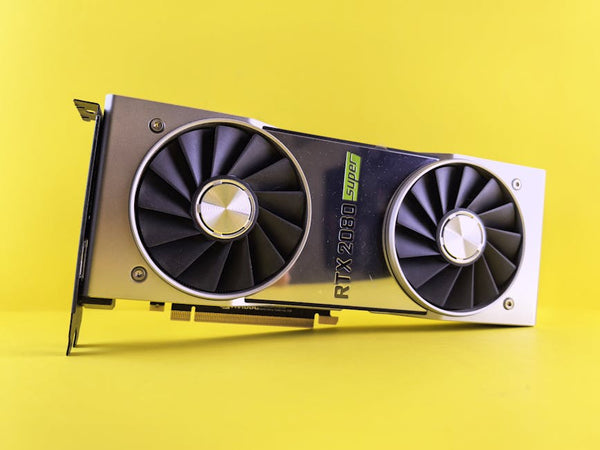
Let's talk about these Ascend 910C chips for a second. Huawei's been pushing these as their answer to NVIDIA's dominance in AI training hardware. Each chip packs serious computational punch — we're talking about processing power that makes your RTX 4090 look like a potato.
Honestly, it's wild to think about. A single one of those chips probably costs more than most people's entire PC builds. And they're using a thousand of them? The power consumption alone must be astronomical. Makes me appreciate my modest RTX 3070 setup I've got at home.
Gaming Technology Implications You Actually Care About
Here's where this tech news gets interesting for us gamers. AI isn't just some abstract concept floating around in research labs — it's already changing how games work.
DLSS? That's AI. Frame generation? AI. Smart NPCs that don't walk into walls constantly? Also AI. When massive companies like Huawei are pushing the boundaries of what's possible with AI training, that innovation eventually makes its way into gaming hardware.
Think about it this way: the computational techniques being developed for training massive AI models directly influence how future GPUs handle real-time AI tasks. Better AI training methods today mean better DLSS performance tomorrow.
Real-World Performance Numbers
The scale we're dealing with here is genuinely bonkers. A 1.6-trillion-parameter model is roughly 10x larger than GPT-3.5. To put that in gaming terms, imagine if Cyberpunk 2077's world was 10x more detailed and every NPC had their own fully-realized personality. That's the kind of computational complexity we're talking about.
Just last week, I was helping a customer at TieredUp Tech in Orange, TX upgrade their rig, and they asked about future-proofing for AI workloads. Stuff like this makes me realize we're probably not even close to understanding what "future-proof" means in the AI era.
The post-training process reportedly required months of continuous computation across the 1,000-chip cluster, highlighting the massive resource requirements for advanced AI development.
The Geopolitical Gaming Hardware Drama
Hot take: this announcement isn't just about AI advancement — it's Huawei throwing down the gauntlet in the AI chip wars. With US sanctions limiting their access to cutting-edge manufacturing, they're basically saying "watch us do it anyway with our own silicon."
For gamers, this creates an interesting situation. More competition in high-performance chips generally means better products and lower prices. But geopolitical tensions also mean supply chain weirdness that can affect GPU availability and pricing.
Remember the crypto mining boom? Or the pandemic chip shortages? Yeah, this kind of large-scale AI training creates similar demand pressures on semiconductor manufacturing. When companies are buying chips by the thousand for AI training, it affects what's available for gaming hardware.
What This Means for Your Next Build
Ngl, if you're planning a build in the next year or two, keep an eye on AI-focused hardware developments. The line between AI acceleration and gaming performance is getting blurrier by the day.
Modern games are already using AI for texture upscaling, voice synthesis, and procedural content generation. As these techniques become more sophisticated, having hardware that can handle AI workloads efficiently becomes more important for gaming performance.
RTX 4000-series cards include dedicated AI acceleration hardware specifically because NVIDIA saw this coming. AMD's RDNA3 architecture also includes AI acceleration, though they've been quieter about marketing it.
The Economics of Extreme Computing
Let's talk money for a minute. Training a model this size with this much hardware probably cost millions of dollars. Just in electricity. That's before you factor in the cost of the chips themselves, the data center space, cooling systems, and the army of engineers required to make it all work.
Personally, I think we're witnessing the emergence of AI as a legitimate infrastructure industry, similar to how cloud computing transformed tech in the 2000s. Companies that can afford to build these massive training clusters gain significant competitive advantages.
For the rest of us? Well, it means the gap between what's possible with unlimited resources versus what we can do with consumer hardware is getting pretty wild. My RTX 4070 Ti is still a beast for gaming, but it couldn't handle even a tiny fraction of what Huawei's setup accomplished.
Consumer Hardware Reality Check
The techniques developed in these massive training runs do filter down to consumer applications, though. Look at how NVIDIA's research into AI upscaling led to DLSS, which legitimately makes games run better on hardware that might otherwise struggle.
Similarly, advances in efficient AI training methods could lead to better on-device AI processing for gaming. Imagine NPCs that can have genuinely intelligent conversations without requiring internet connectivity, or game worlds that adapt and evolve based on actual AI understanding of player behavior.
Will we see home gaming rigs with dedicated AI accelerator cards? Maybe. Will they be affordable? That's the million-dollar question.
Where Gaming AI is Actually Heading
This Huawei development represents the cutting edge of what's possible when you throw unlimited resources at AI training. But gaming doesn't need trillion-parameter models running locally — it needs smart, efficient AI that can enhance the experience without requiring a nuclear power plant.
The real innovation happening in gaming AI focuses on doing more with less. Making NPCs smarter without requiring 50 teraflops of compute. Generating better textures without needing gigabytes of VRAM. Creating more immersive worlds without melting your CPU.
Honestly, I'm more excited about seeing these innovations trickle down into used gaming desktops and mid-range hardware than I am about the bleeding-edge experiments. Most gamers don't have infinite budgets, but they still deserve access to cool AI-enhanced gaming features.
The real test isn't whether you can train a massive model with a thousand specialized chips — it's whether you can make that training efficient enough to run meaningful AI workloads on hardware normal people can actually buy.
This Huawei news shows us what's possible at the extreme end. Now we wait to see how quickly that impossibly advanced tech becomes just another checkbox feature on next year's GPU spec sheets. Because if there's one thing I've learned from building 50+ systems, it's that today's supercomputer performance becomes tomorrow's mainstream gaming hardware faster than anyone expects.










Leave a Comment