


Forza Horizon 6 Loading in 4 Seconds? Microsoft's Advanced Shader Delivery Might Actually Deliver
Remember when you'd boot up a racing game and have enough time to make coffee? Yeah, those days might be numbered. Microsoft's dropping Advanced Shader Delivery on Windows 11 PCs after testing it on Xbox and ROG Ally handhelds, and tbh, the numbers they're throwing around sound almost too good to be true.
We're talking about Forza Horizon 6 going from a painful 90-second initial boot to just 4 seconds. That's a 95% reduction in load times, which honestly sounds like marketing speak until you realize this tech's already been proven on other platforms.
What's Advanced Shader Delivery Actually Doing?
Okay, let's break this down without getting too deep in the weeds. Shaders are basically instructions that tell your GPU how to render everything from lighting to textures to particle effects. Traditionally, games had to compile these shaders on your specific hardware every single time you launched them.
That's why your custom gaming PC would sit there churning for what felt like forever on first boot. Your system's literally figuring out how to translate the game's visual instructions for your exact GPU setup.
Advanced Shader Delivery flips this whole process. Instead of your PC doing all that heavy lifting locally, Microsoft pre-compiles shaders on their servers for different hardware configurations. Your system downloads the pre-cooked versions that match your specs.
Smart? Absolutely. Revolutionary? Maybe not, but definitely practical.
AMD GPUs Getting the VIP Treatment
Here's where things get interesting for anyone building a gaming PC right now. Microsoft's specifically calling out AMD GPUs as getting major benefits from this tech. Why? Because AMD's RDNA architecture plays particularly nice with Microsoft's shader optimization.
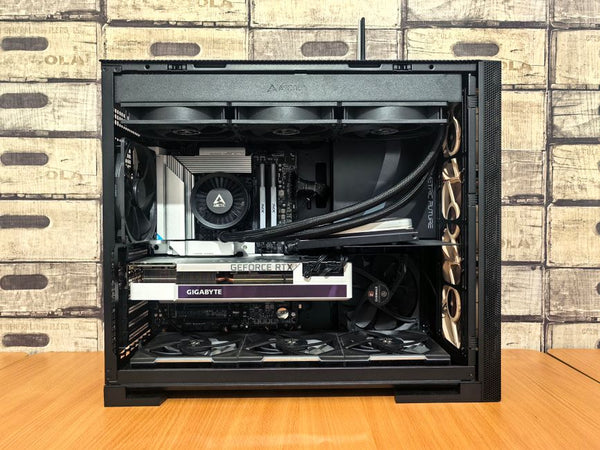
I've been helping customers at TieredUp Tech in Orange, TX spec out builds lately, and honestly, this news might shift some recommendations. If you're torn between an RTX 4060 and a Radeon RX 7600, those 86-second time savings might tip the scales.
But here's my hot take: don't build your entire PC around one optimization. Sure, faster load times are great, but what about actual in-game performance? What about ray tracing? What about DLSS versus FSR?
Real-World Impact Beyond Forza
Let's be real for a second. Forza Horizon 6 isn't even out yet, so these are Microsoft's internal benchmarks. Will every game see these improvements? Probably not immediately.
The tech needs game developers to implement it. Microsoft's obviously prioritizing their first-party titles, but third-party adoption? That's always the wild card. Remember when DirectStorage was going to revolutionize everything? Yeah, it's been... slower than expected.
Still, I'm cautiously optimistic. Racing games are notorious for long initial loads because they're preloading massive open worlds. If this tech can cut that down significantly, imagine what it could do for other shader-heavy titles.
Should This Influence Your Next Gaming PC Build?
Short answer? Not entirely, but it's worth considering.
If you're already leaning AMD for your GPU choice, this is just extra value on top. The RX 7800 XT, for example, already offers solid 1440p performance for the price point. Now it might also give you those sweet, sweet load time reductions.
But don't sleep on the requirements. This tech needs Windows 11, and you'll want a decent SSD to really feel the benefits. There's no point in having pre-compiled shaders delivered to your system if you're still running a mechanical hard drive from 2015.
Personally, I think this matters more for certain types of gamers than others. Got kids who swap between games constantly? Those reduced load times add up. Playing competitive multiplayer where every second counts? Less time staring at loading screens means more time in matches.
The Catch (Because There's Always a Catch)
Here's what Microsoft isn't shouting from the rooftops: this system requires an internet connection and additional bandwidth. Your gaming PC will be downloading shader packages regularly as games update.
For most people, this isn't a big deal. But if you're on limited data or dealing with unreliable internet? You might want to stick with traditional local compilation.
There's also the question of storage. Where are all these pre-compiled shaders going? Your SSD's already packed with game installs, and now we're adding shader cache files to the mix.
What This Means for Budget Builders
Remember when I said I love underdogs and budget picks? This might actually help lower-tier systems punch above their weight class.
Shader compilation is CPU-intensive work. If Microsoft's handling that server-side, your budget gaming PC doesn't need to work as hard on initial game loads. Your Ryzen 5 5600 won't be maxing out trying to compile shaders for the latest AAA title.
That said, you still need decent hardware for actual gameplay. Advanced Shader Delivery won't magically make an RX 6500 XT run Cyberpunk 2077 at max settings. It just makes the waiting less painful.
But honestly? For someone building their first PC or upgrading from a console, those quality-of-life improvements matter more than enthusiasts sometimes admit.
The Bigger Picture
This move feels like Microsoft finally embracing cloud-assisted gaming in ways that actually help players. Instead of trying to stream entire games, they're using their server infrastructure to handle the computational grunt work that makes gaming smoother.
Will other companies follow suit? Sony's already doing similar things with their PS5 architecture. NVIDIA could absolutely implement something like this for GeForce Experience. The question is whether they see the value in the investment.
What I'm really curious about is how this affects the used market. Shop GPUs at TieredUp Tech and you'll see plenty of people still running perfectly capable older cards. Will Advanced Shader Delivery give those systems a new lease on life, or will it create more pressure to upgrade?
Look, I've seen too many "revolutionary" gaming technologies fizzle out to get completely hyped. But reduced load times? That's something every single gamer can appreciate, whether you're running a budget build or a flagship system. Microsoft might actually be onto something here that doesn't require you to mortgage your house for the latest GPU.
The real test comes when Forza Horizon 6 actually launches and we can see if those 4-second boot times hold up in the wild. Until then, it's promising enough to keep AMD GPUs on your shortlist if you're building soon.










Leave a Comment