


Military Drone Tech Gets GPU-Level Performance Boost: What This $30M Contract Means for Gaming Hardware Evolution
Just saw some wild news that got my tech brain spinning faster than my RTX 4090 fans under load. Beehive Industries just scored a $30 million contract from the USAF to 3D print jet engines for military drones and long-range weapons. Yeah, you read that right – we're literally printing jet engines now.
Why should gamers care about military drone engines? Because this tech evolution mirrors exactly what we've seen happen in GPU and CPU development over the past decade. Remember when 3D printing was this niche hobby thing that produced crappy plastic trinkets? Now we're printing actual jet engines. Sound familiar?
The 3D Printing Revolution: From Plastic Toys to Jet Engines
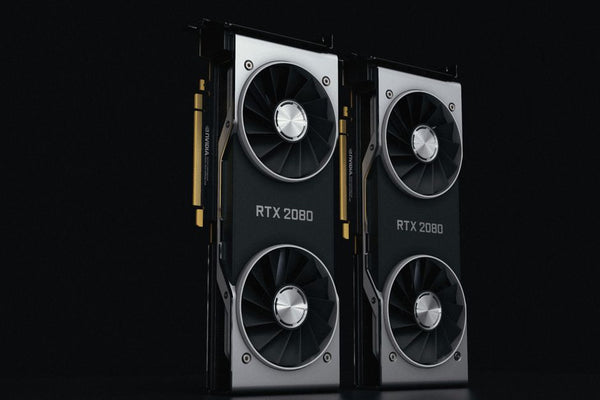
Honestly, this Beehive Industries contract reminds me of when NVIDIA first started talking about ray tracing in 2018. Everyone was like "cool tech demo, but when will it actually matter?" Fast forward to 2024, and ray tracing is basically standard in any decent GPU review.
Beehive's 3D-printed turbojets are reportedly cheaper to build, use, and service compared to traditional manufacturing. That's the same value proposition we see when comparing modern 7nm chips to older 14nm processes – better performance per dollar, lower power consumption, easier to produce at scale.
The parallels are honestly striking. Just like how AMD's chiplet design revolutionized CPU architecture by making production more flexible and cost-effective, 3D printing is doing the same for jet engines. Instead of massive, complex manufacturing setups, you can literally print these things on demand.
Performance Per Dollar: Military Edition
Working at TieredUp Tech here in Orange, TX, I constantly explain to customers why paying more upfront for better components saves money long-term. This USAF contract follows the exact same logic. Traditional jet engine manufacturing requires massive tooling investments, lengthy production cycles, and complex supply chains.
3D printing flips that script. Need a replacement part? Print it. Want to test a design modification? Print it overnight instead of waiting months for tooling changes. It's like having a gaming PC where you can instantly swap out any component for testing – except with actual jet engines.
The cost savings potential is massive. We're talking about engines that traditionally cost hundreds of thousands to manufacture and maintain, potentially dropping to tens of thousands. That's RTX 4090 to RTX 4060 Ti level price differences, but for military hardware.
Small Turbojets: The Gaming Performance Sweet Spot
Here's where it gets really interesting for us tech nerds. These aren't massive fighter jet engines – they're small turbojets designed for drones and long-range weapons. Think of them as the gaming laptop CPUs of the jet engine world: compact, efficient, and purpose-built for specific applications.
Hot take: this is exactly where the innovation happens. Big, powerful engines are like Threadripper CPUs – impressive but overkill for most applications. The real magic happens in the mid-range where you balance performance, cost, and efficiency.
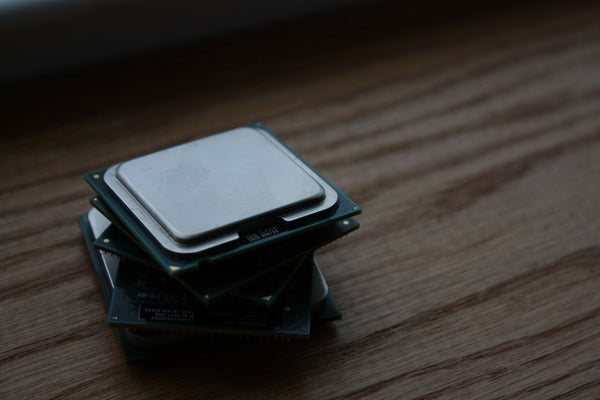
Beehive's approach mirrors what we see in modern CPU benchmark results. The Ryzen 7 7800X3D doesn't win every single test, but it dominates gaming performance while maintaining reasonable power consumption and pricing. That's the sweet spot these 3D-printed engines are targeting.
Testing and Development: The Beta Phase
The USAF contract includes extensive testing and development phases. Sound familiar? It's basically the same process GPU manufacturers use with their reference designs before AIB partners create custom versions.
First, Beehive proves their base design works reliably. Then they'll optimize for specific use cases – maybe one variant focuses on fuel efficiency (like undervolted GPUs), while another prioritizes raw performance (think factory overclocked cards).
What's wild is how fast this iteration cycle could be. Traditional engine development takes years because you need new tooling for every design change. With 3D printing, you can literally print a new variant tomorrow and have it running tests next week. That's the kind of rapid iteration we see in gaming hardware development.
Supply Chain Resilience: No More Scalper Problems
Remember the GPU shortage nightmare? When RTX 3080s were selling for $2000+ because of supply chain bottlenecks and scalpers? This 3D printing approach could eliminate similar issues for military hardware.
Instead of depending on complex global supply chains with dozens of specialized manufacturers, you print locally. Need engines for drones deployed in Europe? Print them at a European facility. Pacific theater? Print them there too.
Personally, I think this distributed manufacturing model will eventually trickle down to consumer electronics. Why ship graphics cards across the ocean when you could print components locally and just ship the specialized chips? Obviously we're not there yet, but the concept is solid.
The military gets it. They're investing in technology that reduces dependency on traditional manufacturing bottlenecks. It's like building your custom gaming PC – you want control over your components and supply chain.
Quality Control: The Benchmark Battle
Now, here's where I'm genuinely uncertain about this whole thing. 3D printing quality has improved dramatically, but jet engines operate under extreme conditions. We're talking about thousands of RPM, high temperatures, and literal life-or-death reliability requirements.
It's like the difference between a budget PSU that works fine for office tasks versus a high-end unit that needs to deliver stable power under full gaming load for years. The tolerances and quality standards are just different levels entirely.
But here's the thing – if Beehive can prove their 3D-printed engines meet military specifications, that's basically the ultimate stress test. Military requirements make even the most demanding gaming performance benchmarks look easy.
Future Implications: Beyond Military Applications
This $30 million contract isn't just about military drones. It's proving that 3D printing can handle critical, high-performance applications. That validation opens doors for civilian uses we haven't even considered yet.
Think about it – if you can 3D print a reliable jet engine, what else becomes possible? Maybe custom cooling solutions for extreme overclocking? On-demand replacement parts for aging hardware? The possibilities are honestly exciting.
We're already seeing hints of this in consumer tech. Framework laptops let you swap modules, Steam Deck has printable accessories, and enthusiast communities regularly design custom PC parts. This military contract might accelerate that trend significantly.
The gaming industry has always been a proving ground for new technologies. Ray tracing, high refresh displays, advanced cooling solutions – they all started in gaming before going mainstream. Could 3D-printed precision components follow the same path?
The Performance Revolution Continues
What gets me most excited about this news isn't the military application itself – it's the validation of additive manufacturing for critical performance components. We've reached a tipping point where 3D printing isn't just for prototypes or simple parts anymore.
This technology maturation cycle happens constantly in our space. PCIe 5.0 seemed pointless when it launched because no GPUs could saturate PCIe 4.0 bandwidth. Now we're seeing cards that actually benefit from that extra headroom.
Beehive Industries just proved 3D printing can handle jet engine-level performance requirements. That's going to cascade through every industry that needs precision-manufactured components. Including ours.
The next few years are going to be wild for manufacturing technology. Between AI-optimized designs, advanced materials, and proven 3D printing capabilities, we're looking at a complete revolution in how high-performance components get made. And honestly? I can't wait to see what that means for our next GPU generation.











Leave a Comment