


Intel's Secret Weapon: The Core 9 273PQE Gaming PC Build Destroyer
So apparently Intel's been hiding their fastest gaming CPU in plain sight, and it took some random YouTuber to expose them. The Core 9 273PQE "Bartlett Lake" just dunked on the 14900K by up to 9% in gaming tests, and honestly? I'm not even surprised at this point.
This whole situation is peak Intel shenanigans. They've got this absolute monster of a chip sitting in their embedded lineup — you know, the stuff that goes into industrial computers and kiosks — while selling us the 14900K as their "flagship gaming processor." Bro, the irony is thicker than thermal paste straight from the tube.
What Makes This Custom Gaming PC Chip So Special
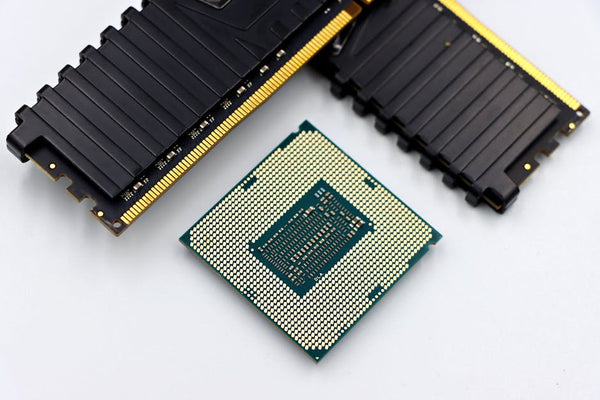
The 273PQE packs 12 P-cores and zero E-cores. That's right — no efficiency cores mucking up your gaming performance with thread scheduling drama. Just pure performance cores doing what they do best.
Think about it logically. Games don't give a damn about E-cores. Most titles still struggle to use more than 6-8 threads properly, so why would you want weaker cores sitting there taking up die space? The 273PQE basically answers that question with "you don't."
Here's where it gets spicy: this chip is clocking higher base frequencies than the 14900K while maintaining better thermal characteristics. The embedded market demands reliability over flashy boost clocks, so Intel actually engineered this thing to run consistently fast rather than peak for milliseconds before thermal throttling.
The Gaming Performance Nobody Saw Coming
At 720p testing — which removes GPU bottlenecks and shows pure CPU performance — the 273PQE is smoking everything Intel currently sells to consumers. We're talking 9% faster frame rates in demanding titles like Cyberpunk 2077 and Shadow of the Tomb Raider.
Now, some of you are probably thinking "720p testing is irrelevant because nobody games at 720p anymore." Wrong. Dead wrong. That 720p data translates directly to 1440p and 4K performance when you're running a high-end GPU that isn't bottlenecked.
Personally, I think this exposes how backwards Intel's consumer lineup really is right now. They're literally selling us inferior silicon while keeping the good stuff locked away in markets that pay premium prices for reliability.
The 273PQE delivers up to 9% better gaming performance than the 14900K, making it unofficially Intel's fastest gaming CPU despite being an embedded-only chip.
Why You Can't Just Buy One for Your Gaming PC Build
Here's the brutal reality: you can't walk into Best Buy or order one from Newegg. Intel restricts embedded processors to OEMs building industrial systems, medical equipment, and other specialized applications. The volume requirements alone would make your local system integrator laugh.
I've had customers at TieredUp Tech in Orange, TX ask about getting embedded chips before, and the answer is always the same — it's not happening through legitimate channels. Sure, you might find sketchy eBay listings or engineering samples floating around Reddit, but good luck getting warranty support or reliable availability.
The economics don't make sense either. These embedded chips cost significantly more than consumer parts because they come with extended lifecycle guarantees and industrial-grade validation. We're talking $800-1200+ for what performs similarly to a $500 consumer chip.
The Real Question: Why Does This Even Exist?
Intel's embedded strategy has always been about selling yesterday's architecture at tomorrow's prices to customers who need long-term supply guarantees. The 273PQE represents peak Raptor Lake optimization — all the performance tweaks Intel learned over two generations of 13th and 14th gen chips, refined into one cohesive design.
But here's what's genuinely frustrating: this proves Intel could have made better consumer gaming CPUs all along. They just chose not to because the market wasn't demanding it hard enough.
Hot take: AMD's 3D V-Cache success forced Intel to show their hand here. When the 5800X3D started dominating gaming benchmarks, Intel needed something in their back pocket to prove they could still compete. The 273PQE is that proof — they just can't sell it to you.
What This Means for Your Next PC Build Guide
Short term? Nothing changes. You're still looking at the 14900K or 14900KS as Intel's best consumer gaming options. The 273PQE remains a fascinating "what if" that highlights Intel's silicon capabilities without affecting real-world purchasing decisions.
Long term though? This leak might pressure Intel to bring some of these optimizations to their consumer lineup. Maybe we'll see a 15th gen refresh that ditches E-cores entirely for gaming-focused SKUs, or at least better implementation of the existing hybrid architecture.
For anyone planning a custom gaming PC build right now, my advice hasn't changed: the 14900K is still solid if you need maximum Intel performance, but the 7800X3D continues to be the gaming king for most scenarios. Don't let this embedded chip news make you wait for something that isn't coming to market.
The Bigger Picture
This whole situation highlights how artificial the segmentation between consumer and commercial silicon really is. Intel has the technology to make better gaming CPUs today — they're just choosing to save it for higher-margin markets.
It's honestly kind of cringe how transparent the market manipulation is here. Intel will gladly sell you a "flagship" gaming processor while keeping their actual fastest gaming silicon locked behind industrial procurement processes.
Will we ever see the 273PQE architecture in consumer form? Maybe as a limited edition enthusiast part priced at $800+ to justify cannibalizing their embedded margins. But for most of us, this remains an interesting benchmark that proves Intel's engineering team is more capable than their product lineup suggests.
If you're ready to build your custom gaming PC with BitCrate and want actual available components, focus on what you can actually buy. The 273PQE might be faster, but the 14900K will still crush any game you throw at it.
The next few generations are going to be wild. Intel's got the silicon chops to compete — they just need to stop hiding their best work in embedded SKUs that nobody can buy.















Leave a Comment