


Pokemon TCG Investing: Which Cards Actually Hold Their Value?
Let me guess — you've been staring at your Pokemon card collection, wondering if you're sitting on a goldmine or just colorful cardboard? I've been getting this question nonstop since Pokemon TCG investing exploded back into mainstream consciousness. Working at TieredUp Tech here in Orange, TX, I see collectors walk in daily with binders full of hopes and dreams, asking the same thing: "Which cards are actually worth something?"
Here's the thing nobody wants to admit about Pokemon TCG investing: most cards aren't investments at all. They're beautiful, nostalgic pieces of art that make us feel something. But if you're serious about value retention and growth, we need to talk real numbers.
The Uncomfortable Truth About Pokemon TCG Card Values
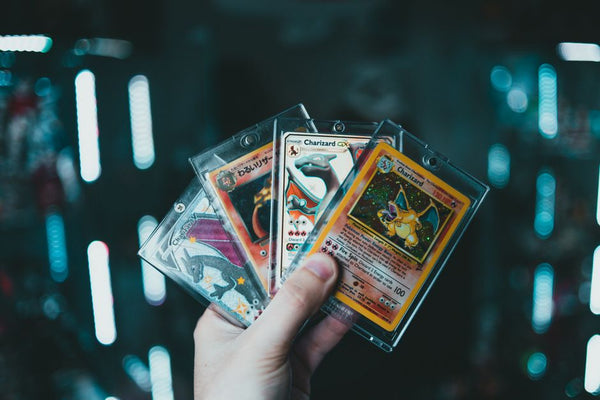
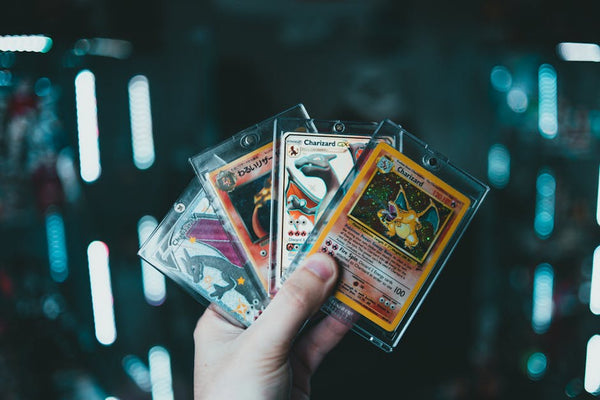
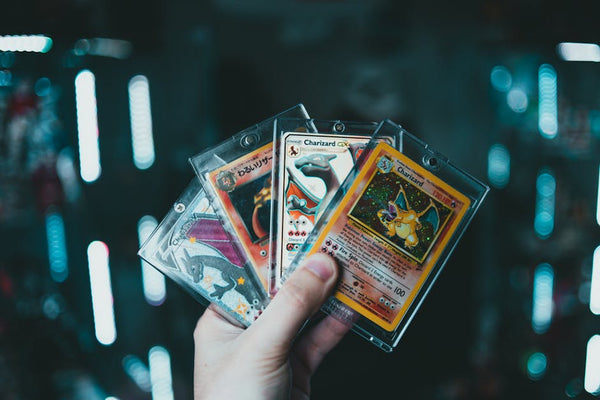
Remember when your cousin bragged about his charizard being worth "thousands" back in 1999? He wasn't completely wrong. A Base Set Shadowless Charizard in PSA 10 condition sold for $420,000 in 2022. But here's what he didn't tell you — that's literally one card out of millions printed.
Most Pokemon cards follow the same pattern as any collectible market. Condition is king. Rarity matters. Age helps. And hype? Hype can make or break values overnight.
I watched a customer last month get genuinely upset when I explained his unlimited Base Set Charizard — the one with the white border — was worth maybe $300 in near mint condition, not the $50,000 he'd seen on YouTube. The difference? His wasn't first edition, wasn't shadowless, and had some whitening on the edges.
Details matter in this game.
First Edition vs Everything Else: Why Timing Was Everything
Want to know the biggest factor in Pokemon card investing? Being born at the right time. First edition Base Set cards from 1998 dominate the high-value market because they represent the very beginning of Pokemon TCG in English.
Think about it — Wizards of the Coast printed these cards when Pokemon was just starting to explode in popularity. They had no idea kids would still be obsessing over these designs 25 years later. First edition stamps weren't marketing gimmicks back then; they were just part of the printing process.
A first edition Base Set booster box sold for over $400,000 in 2021. An unlimited Base Set box? Maybe $15,000 if you're lucky. The difference is staggering.
But here's where it gets interesting — not all first edition cards hold value equally. That first edition Machamp everyone has? It's worth maybe $50 in mint condition because it was included in the two-player starter set. Everyone got one.
Modern Cards That Actually Matter
Honestly, I think people sleep on modern Pokemon TCG investing opportunities because they're too busy chasing vintage nostalgia. But some recent cards are already showing serious appreciation.
Take the Champion's Path Charizard VMAX Rainbow Rare. When it dropped in 2020, people were pulling it for $300-400. Now? PSA 10 copies regularly sell for $800-1000. That's solid growth in just three years.
The Japanese market tells us everything about future trends. Cards that pop off in Japan usually follow the same pattern here six months later. The Eevee Heroes sets from 2021? Those alternate art cards are climbing steadily.
Hot take: I think we're sleeping on Brilliant Stars. The Charizard V alternate art and Charizard VSTAR rainbow rare are both undervalued right now. When the current generation of kids hits their nostalgic phase in 15 years, these will be their chase cards.
Japanese vs English: The Language Premium
Here's something most Pokemon TCG investors don't consider — Japanese cards often hold value better than English versions. Why? Lower print runs, higher quality control, and honestly, Japanese collectors take better care of their cards.
A Japanese Base Set No Rarity Charizard in PSA 10 regularly outperforms its English counterpart by 20-30%. The card quality is noticeably better, with sharper cuts and more consistent centering.
But there's a catch. Japanese cards are harder to authenticate for English-speaking collectors, and the market is smaller. You need to know what you're doing.
Grading: Your Best Friend or Expensive Mistake?
Should you grade every card you think might be valuable? Absolutely not. PSA and BGS grading costs $20-100+ per card depending on turnaround time. If your card isn't worth at least $200 raw, grading probably doesn't make financial sense.
I've seen too many people spend $50 grading a card worth $30. The math doesn't work unless you're getting significant grade premiums.
But when grading works, it really works. A raw Charizard might sell for $8,000. That same card in PSA 10? Could hit $25,000. The grade premium is insane for high-end vintage cards.
My rule: only grade cards you're confident will score 8.5 or higher. Anything lower usually doesn't justify the cost and time investment.
Population Reports Matter More Than You Think
This is where Pokemon TCG investing gets nerdy, but bear with me. PSA and BGS publish population reports showing how many cards they've graded at each level. These numbers directly impact values.
A card with 500 PSA 10s will always be worth less than one with 50 PSA 10s, assuming similar demand. Supply and demand still rule this market.
First edition Base Set Charizard has over 3,000 PSA 10 copies. Sounds like a lot? Neo Genesis first edition Lugia has fewer than 300 PSA 10s. Guess which one has more room to grow?
The Cards Everyone Ignores (But Shouldn't)
Want my actual hot Pokemon TCG investing picks? Stop chasing Charizard variants and start looking at trainers and energy cards from early sets. Seriously.
A first edition Base Set Professor Oak can hit $3,000+ in PSA 10. Double Colorless Energy from the same set? $1,500+. Nobody talks about these because they're not Pokemon, but they're essential game pieces with tiny populations in high grades.
Personally, I think trophy cards are massively undervalued. Pokemon World Championship cards, tournament prizes, and regional championship promos have provable scarcity. You know exactly how many exist because they were distributed at specific events.
The 1998 Pokemon World Championships No. 2 Trainer card sold for over $128,000 in 2021. Only 20-24 copies exist. Compare that to the thousands of first edition Charizards floating around.
Modern Investment Traps to Avoid
Not everything shiny is gold, and the modern Pokemon TCG market is full of traps for inexperienced investors.
McDonald's promo cards? Usually worthless despite the hype. They print millions of these things. Same goes for most Pokemon Center exclusive cards — the "limited" quantities aren't actually that limited.
Special delivery Bidoof was supposed to be rare and valuable. People were flipping them for $200-300 initially. Now you can grab one for $50. The market corrected itself quickly once people realized how many were actually distributed.
Here's my general rule: if you can easily buy it at retail, it's probably not a good investment. Real value comes from genuine scarcity or exceptional condition of already-scarce items.
The Hype Cycle Problem
Pokemon cards follow predictable hype cycles, and timing your entry and exit points matters enormously. New sets create initial excitement, prices spike, then reality sets in and most cards crater to their actual demand levels.
Evolving Skies is a perfect example. When it first dropped, Rayquaza VMAX alternate art was hitting $400-500. Everyone thought it would keep climbing. Six months later? You could find them for $150-200. The market got oversupplied.
Smart Pokemon TCG investing means avoiding the initial hype and buying after the correction. Or, if you're buying at release, you better be selling into that initial excitement.
Storage and Preservation: Protecting Your Investment
None of this matters if you can't keep your cards in mint condition. I've seen $10,000 cards turned into $500 cards because someone stored them wrong.
Penny sleeves, toploaders, and dry storage aren't negotiable for valuable cards. Temperature fluctuations and humidity will destroy card values over time. If you're serious about Pokemon TCG investing, climate control is mandatory.
And please, for the love of all that's holy, don't store valuable cards in binders with PVC pages. That stuff will damage your cards over time. Use archival-quality storage materials or watch your investments slowly deteriorate.
Where This Market Is Headed
The Pokemon TCG investing market isn't going anywhere, but it's maturing. The days of throwing money at random cards and hoping for 10x returns are mostly over for vintage stuff.
What excites me most? The current generation of kids discovering Pokemon through Pokemon GO, the recent games, and new TCG sets. In 15-20 years, they'll be nostalgic for cards we consider "new" today.
Cards like the Marnie trainer from Sword & Shield, the Professor's Research alternate arts, and even some of the Special Delivery promos could see serious appreciation once that nostalgia cycle kicks in.
The key is identifying which current cards will trigger those nostalgic feelings years from now. It's not an exact science, but patterns from previous generations give us clues about what might work.
Want to explore some Pokemon TCG options without breaking the bank? Check out our Pokemon TCG selection — we try to keep both budget-friendly modern packs and some vintage finds when we can source them reasonably.
The Pokemon TCG market rewards patience, research, and realistic expectations. It punishes FOMO, speculation without knowledge, and poor storage practices. Choose your approach wisely.







Leave a Comment