


AMD's New Ryzen AI Max+ PRO 495 APU: The 192GB Memory Beast That's Got Everyone Confused
Remember when 16GB of RAM felt like overkill? I do. Back when I was at GameStop, customers would argue with me about whether they really needed more than 8GB for gaming. Now AMD's rumored Ryzen AI Max+ PRO 495 APU is supposedly packing 192GB of unified memory. One hundred and ninety-two gigabytes. That's not a typo.
According to leaked PassMark benchmarks making the rounds, this new APU isn't exactly setting the world on fire performance-wise compared to Strix Halo. But that memory configuration? That's something else entirely.
What Makes This APU Different From Regular CPUs
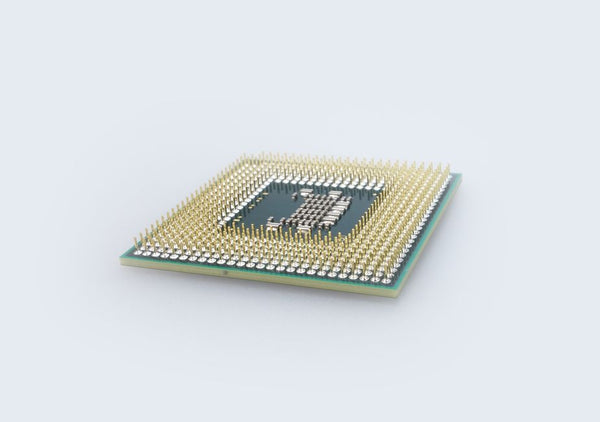
Let's start with the basics because honestly, APUs confuse the hell out of people. An APU (Accelerated Processing Unit) combines your CPU and GPU on the same chip. Think of it as the Swiss Army knife of processors — it does everything, just not always as well as dedicated components.
The Ryzen AI Max+ PRO 495 keeps the same core configuration as its predecessor. Same CPU cores, same GPU compute units. So why should you care?
That memory situation is wild. We're talking about unified memory here, which means both the CPU and integrated GPU share the same pool. No more shuttling data back and forth between system RAM and VRAM. It's all one big happy family.
The Memory Math That Doesn't Add Up (Yet)
Here's where things get weird. Desktop DDR5 maxes out around 128GB realistically. LPDDR5X can push higher capacities, but we're talking about serious engineering wizardry to hit 192GB. Are we looking at some kind of hybrid memory solution? Stacked memory modules? AMD isn't talking, but the PassMark leak suggests it's real.
Personally, I think this is AMD testing the waters for workstation applications that desperately need ridiculous amounts of unified memory. AI workloads, 3D rendering, video editing — these tasks eat RAM like I eat pizza on weekends.
Gaming Performance: The Reality Check You Need
Let's be real about gaming performance expectations. The leaked benchmarks show modest improvements over Strix Halo. We're talking maybe 5-10% better scores in PassMark, which translates to pretty much nothing you'll notice while playing games.
Why? Because integrated graphics still have the same fundamental limitations. Sure, you've got more memory bandwidth to work with, but the GPU cores themselves haven't changed dramatically. It's like putting premium gas in a Honda Civic — technically better, but you're not suddenly racing Ferraris.
That said, there's something to be said for having absurd amounts of unified memory. Games are getting chunkier by the year. Call of Duty warzone clocks in at over 100GB installed. Having that much unified memory means potentially keeping entire game assets in memory without swapping to storage.
Who Actually Needs 192GB of Unified Memory?
Hot take: most gamers don't need anywhere near this much memory. But content creators? AI researchers? People running multiple VMs? They're probably drooling right now.
I helped a customer at our shop recently who was trying to run AI models locally on his gaming rig. Dude was constantly running out of VRAM on his RTX 4070. An APU with 192GB of unified memory would solve his problem instantly, even if the raw compute power isn't as high as a discrete GPU.
The real question is pricing. If this thing costs more than a decent CPU plus GPU combo, what's the point? AMD's targeting the professional market here, not budget gamers looking to build their custom gaming PC with BitCrate.
The PassMark Benchmarks: Reading Between the Lines
PassMark scores are useful, but they don't tell the whole story. The leaked results show incremental improvements across CPU and GPU tasks, but nothing earth-shattering. This feels more like an engineering showcase than a gaming revolution.
The Ryzen AI Max+ PRO 495 scored approximately 8% higher in multi-threaded CPU tests compared to previous Strix Halo samples, with GPU compute showing similar modest gains.
What's interesting is the memory bandwidth scores. If those numbers are accurate, we're looking at significantly higher throughput than traditional desktop setups. That could matter for specific workloads, even if it doesn't transform gaming.
Should You Wait for This APU?
Honestly, probably not if you're building a gaming rig. The performance gains don't justify waiting when you could build something solid right now. But if you're doing professional work that benefits from massive memory pools, this could be game-changing.
The thing is, we don't even know if this APU will make it to market in this configuration. Leaked benchmarks are fun to analyze, but they're not product announcements. AMD could easily scale back the memory or change the design entirely.
Here's what I'm actually curious about: power consumption. Feeding 192GB of memory isn't free from a power perspective. Are we looking at mobile chips or desktop monsters that need serious cooling?
The Bigger Picture for APU Development
This leak, real or not, shows where AMD thinks the market is heading. More unified memory, tighter CPU-GPU integration, and targeting professional workloads alongside gaming. It's smart positioning against Intel's integrated graphics and Apple's unified memory approach.
But let's not get carried away. Better integrated graphics don't eliminate the need for discrete GPUs. If you want to play Cyberpunk 2077 at 4K with ray tracing, you're still buying a dedicated graphics card. APUs are for different use cases entirely.
The modest performance bump over Strix Halo tells me this is more about memory capacity than raw speed. That's fine for specific applications, but it won't revolutionize gaming overnight.
What happens when memory becomes this abundant? Developers might finally stop optimizing for memory constraints. Games could load entire worlds into RAM instead of streaming from SSDs. AI applications could run models that currently require server farms. The possibilities are intriguing, even if the immediate gaming benefits aren't obvious.













Leave a Comment