


Zeus GPU Test Chip Tape-Out: Breaking Down Bolt Graphics' Bold Claims
So here's something that caught my attention while scrolling through tech news this week. Bolt Graphics just completed their first Zeus GPU test chip tape-out on TSMC's 12nm process. Big deal, right? Well, maybe. They're claiming 17x lower cost of compute compared to what's currently out there. That's a massive claim that honestly made me do a double-take.
But hold up. Before we dive into what this could mean for your next gaming rig, let's talk about what a "tape-out" actually is. Because if you're like most of the customers I help at our shop here in Orange, TX, this might sound like some weird manufacturing term that doesn't affect you at all.
What Does GPU Test Chip Tape-Out Actually Mean?
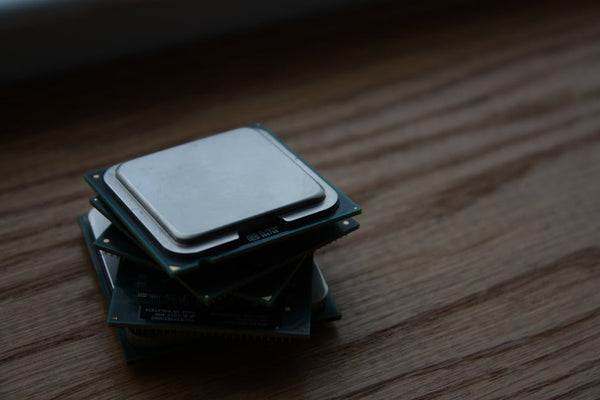
Remember when your favorite indie game dev finally moved from alpha to beta testing? That's basically what happened here. Bolt Graphics has been running their Zeus GPU design on FPGA emulation — think of it as really expensive Lego blocks that can pretend to be different computer chips. Now they've sent their actual design to TSMC to manufacture real silicon.
This matters because FPGA testing is slow. Painfully slow. Like watching paint dry while your friend explains cryptocurrency for the hundredth time slow. Real silicon? That's where you see actual performance numbers.
The 12nm process they chose is interesting though. It's not bleeding-edge — TSMC's got 3nm and 5nm processes that are way more advanced. But 12nm is mature, reliable, and crucially, cheaper to manufacture on. Smart move for a startup that's probably watching every penny.
Why Startups Usually Fail at This Game
Let's be real here. GPU development isn't exactly a friendly neighborhood barbecue. You've got NVIDIA and AMD basically owning the entire market, with Intel trying to muscle in with Arc GPUs. These companies have billions in R&D budgets and armies of engineers.
What chance does a startup have? Historically? Not great. I've watched dozens of "revolutionary" GPU companies disappear faster than limited edition console restocks. The barrier to entry is absolutely brutal.
Breaking Down the 17x Cost Claim
Here's where things get spicy. Bolt Graphics isn't just claiming better performance — they're claiming dramatically lower cost per unit of compute. That's either revolutionary or complete marketing nonsense. Honestly? I'm not sure which yet.
When they say "cost of compute," they're talking about how much computational work you get per dollar spent. Think of it like miles per gallon, but for number crunching. If they're right, this could shake up everything from budget gaming builds to data center operations.
But here's what makes me skeptical — we've heard these claims before. Remember when Larrabee was supposed to change everything? Or when AMD's Bulldozer architecture was going to dominate Intel? Sometimes the theoretical doesn't translate to real-world performance.
The TSMC 12nm Choice Tells a Story
Why 12nm instead of something more cutting-edge? Cost, obviously. But there's strategy here too. If you're targeting 17x lower cost of compute, you need manufacturing costs that won't eat your entire margin.
TSMC's 12nm is a mature node. It's been around since 2017, which in semiconductor terms means all the kinks are worked out. Yields are good, costs are predictable, and capacity is available. For a startup, that's way more important than having the absolute latest process technology.
TSMC's 12nm process offers the perfect balance of performance, cost, and manufacturing maturity for startups testing new architectures.
What This Actually Means for Gamers
Okay, but what does this mean for you if you're shopping for a graphics card? Short answer — probably nothing, at least not yet. This is a test chip. They're not announcing gaming performance numbers or street prices.
However, if Bolt Graphics actually delivers on their cost claims, it could pressure NVIDIA and AMD to be more aggressive with budget GPU pricing. Competition is good for consumers, even if the competition doesn't initially succeed.
I remember helping a customer last month who was torn between a used RTX 3060 and a new RTX 4060. His budget was tight, and honestly, the price difference between decent gaming performance and excellent gaming performance is still way too large. More players in the GPU space could help fix that gap.
The Real Test Isn't Performance — It's Economics
Here's my hot take: even if Zeus delivers on performance, the real challenge is business execution. Can they manufacture at scale? Can they build drivers that don't crash every other game? Can they convince system integrators to actually use their chips?
The GPU market isn't just about having the best chip. It's about software support, partner relationships, and supply chain management. That's where most GPU startups die, not in the lab.
Personally, I think the 17x cost claim is probably measured under very specific workloads that favor their architecture. Will that translate to 17x better value in gaming? Almost certainly not. But even if they achieve 2x or 3x better price-to-performance, that's still significant.
Why You Should Pay Attention (Maybe)
Look, I'm naturally skeptical of startup claims. I've seen too many "next-generation" products that turned out to be vaporware. But competition in the GPU space is desperately needed.
NVIDIA's got a stranglehold on high-end gaming performance. AMD's competitive in the midrange but still trails in ray tracing and DLSS equivalent features. Intel's Arc GPUs showed promise but launched with driver issues that hurt adoption.
Even if Bolt Graphics doesn't become the next big thing, their pressure on pricing could benefit everyone. When I'm helping customers shop GPUs at TieredUp Tech, I always wish there were more solid options in that $200-400 range where most people actually buy.
The Timeline Reality Check
Don't hold your breath though. Test chip to retail product is usually at least 18-24 months, assuming everything goes perfectly. And things rarely go perfectly in semiconductor development.
By the time Zeus GPUs might hit the market, we'll probably be looking at RTX 50-series and RDNA 4 from the big players. The competitive landscape will be completely different.
But that's okay. The GPU industry moves in waves, and sometimes the most important thing a startup can do is prove that alternative approaches are viable. Even if Bolt Graphics doesn't succeed long-term, they might inspire larger companies to explore similar cost-reduction strategies.
The real question isn't whether Zeus will dethrone NVIDIA tomorrow. It's whether this test chip validates their approach enough to secure serious funding and partnerships. That's the next milestone that actually matters for consumers.


























Leave a Comment