


New CPU Startup Could Change Gaming PC Build Performance Forever
So there's this wild story brewing in the CPU world that's got me genuinely excited about what gaming PC builds might look like in a few years. Three absolute legends from Apple's silicon team and Nuvia just announced they're starting fresh with a company called Nuvacore — and they're promising to literally "rewrite the rules of silicon." Yeah, I know that sounds like typical marketing BS, but hear me out.
Gerard Williams III, John Bruno, and Ram Srinivasan aren't your typical startup bros. Williams was the chief architect behind Apple's A-series chips that made iPhones actually good at gaming. Bruno helped design the M1 that made Intel sweat bullets. These guys know how to make silicon that doesn't suck.
Why This Matters for Your Gaming PC Build
Here's the thing — the CPU market has been kinda stagnant for gamers lately. Sure, AMD's Ryzen 7000 series slaps hard, and Intel's 13th gen isn't terrible, but we're talking incremental gains. Like 5-10% generation over generation. Meh.
But what if someone built a CPU from scratch specifically for always-on, compute-intensive workloads? That's exactly what Nuvacore is targeting, and it sounds perfect for modern gaming demands.
The AI Gaming Revolution Nobody's Talking About
Modern games aren't just pushing polygons anymore, bro. DLSS 3 Frame Generation, FSR, ray tracing denoising, AI-enhanced NPCs — your CPU is doing way more AI compute than you realize. When I was helping a customer at TieredUp Tech in Orange, TX last week configure a high-end build, we spent an hour talking about how his RTX 4090 was basically waiting on his CPU for AI workloads in Cyberpunk 2077.
Traditional CPUs weren't designed for this stuff. They're general-purpose chips trying to do everything okay instead of doing AI compute really well.
What Makes Nuvacore Different (And Why I'm Not Totally Buying The Hype Yet)
Nuvacore isn't just promising better performance. They're claiming they'll build CPUs that stay "always-on" for AI workloads without destroying your power bill. That's huge if true.
Think about it — what if your CPU could handle real-time ray tracing calculations, AI upscaling, and physics simulations without breaking a sweat? What if it could do all that while sipping power like Apple's M2 chips?
But honestly? I'm skeptical. Every CPU startup promises revolutionary performance. Remember when everyone thought ARM would kill x86 in gaming? How'd that work out?
The Talent Factor
What gives me hope is the team behind this. Williams architected the A12 Bionic that first brought console-level gaming to mobile. That chip was genuinely impressive — it could run full AAR titles at 60fps on a phone battery.
Bruno's work on Apple Silicon speaks for itself. The M1 Ultra can edit 8K video while running Blender renders in the background. That's the kind of parallel compute performance that could transform gaming.
Srinivasan helped optimize Nuvia's Phoenix cores before Qualcomm bought them out. Those cores were supposedly going to challenge both Intel and AMD in laptops before corporate politics killed the project.
Custom Gaming PC Builds in 2027 Could Look Completely Different
Here's where this gets interesting for us builders. What if the next generation of custom gaming PCs doesn't need massive coolers and 1000W power supplies?
Personally, I think we're heading toward a future where CPU and GPU distinctions blur completely. Nuvacore's approach sounds like they're building processors that can handle both traditional compute and specialized AI workloads efficiently.
Imagine building a system where your "CPU" can handle 4K ray tracing while streaming, recording, and running background AI tasks — all at 65W TDP.
That would completely change our PC build guide recommendations. No more choosing between gaming performance and creator workloads. No more $200 coolers just to keep your chip from throttling.
The Reality Check
But let's pump the brakes a bit. Nuvacore is still years away from shipping silicon. They need to:
- Actually design and validate their architecture
- Find a fab partner (good luck with TSMC's waiting list)
- Get Windows and game developers to optimize for their instruction sets
- Compete with Intel and AMD's massive R&D budgets
That's not exactly easy mode, even with legendary talent.
What This Means for Builders Right Now
Should you wait to build your gaming rig? Hell no. Nuvacore won't have consumer chips for at least 3-4 years, and that's if everything goes perfectly.
But this news does make me think differently about upgrade paths. If AI compute becomes central to gaming (and it already is with DLSS/FSR), then investing in current-gen hardware that handles mixed workloads well makes sense.
Hot take: I'd rather build around a Ryzen 7 7700X that can handle AI tasks decently than chase pure gaming benchmarks with older architectures. Future-proofing matters when silicon paradigms might shift.
The Socket Question
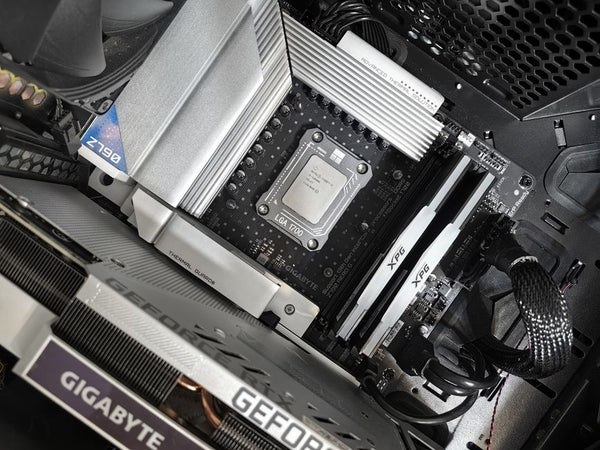
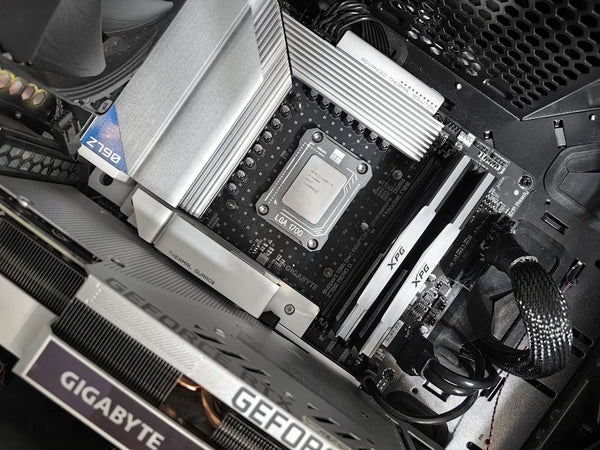
Here's something nobody's discussing — what socket will Nuvacore use? Will they go with existing AM5 or LGA1700 compatibility, or force another motherboard upgrade cycle?
My guess? They'll need custom motherboards with specialized power delivery and interconnects. That means early adopters will pay premium prices for everything, not just the CPU.
Why Legendary Builds Matter More Now
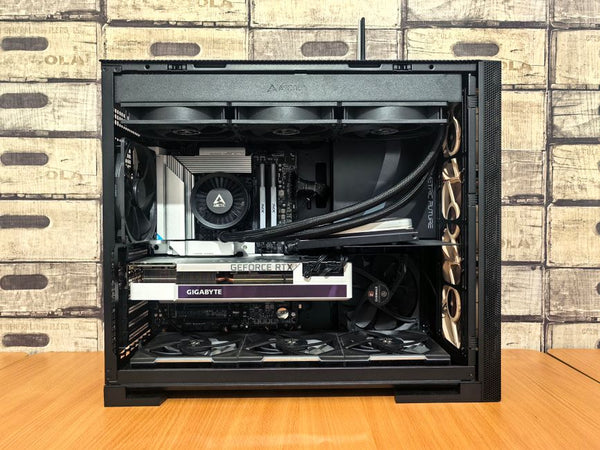
This potential shift toward AI-focused CPUs makes me appreciate current high-end builds even more. Today's Legendary-Tier BitCrate builds ($3k+) represent peak performance for traditional gaming architectures.
Think about it — we might look back at RTX 4090 + Ryzen 9 7950X3D combos the way we remember Voodoo 3DFX cards. Legendary for their time, but completely different from what came next.
That doesn't mean they'll become obsolete overnight. These systems will dominate gaming for years. But the next major leap might come from companies like Nuvacore rather than Intel's 15th gen incremental updates.
The Ecosystem Problem
Even if Nuvacore nails their silicon design, they still need software support. Game engines, streaming software, productivity apps — everything needs optimization for new architectures.
Apple had this advantage with tight hardware-software integration. Microsoft and game developers have zero incentive to prioritize a startup's chips over Intel and AMD's massive install base.
Unless Nuvacore's performance gains are absolutely massive — like 2x current gen — adoption will be slow and painful.
The Bottom Line for Builders
Should this news change how you approach your next build? Probably not immediately. But it's worth considering what computing might look like when AI workloads become standard in every game.
Nuvacore's "rewrite the rules" promise sounds ambitious as hell. Maybe too ambitious. But with the talent behind it and the clear market need for better AI compute, I'm cautiously optimistic.
The CPU wars just got way more interesting. Intel and AMD better be paying attention, because silicon disruption happens faster than anyone expects. Just ask Intel how they felt about Apple's M1 launch — that came from nowhere and changed everything practically overnight.
Will Nuvacore pull off the same miracle for gaming PCs? We'll find out in a few years. Until then, keep building with what works today, but maybe start thinking about tomorrow's possibilities.











Leave a Comment