


AMD Ryzen 9 9950X3D2 vs Ryzen 9 9950X3D: Gaming PC Build Beast or Marketing Gimmick?
So AMD dropped another X3D variant on us. Again. Because apparently we didn't have enough choices already when building a custom gaming PC, right? The Ryzen 9 9950X3D2 promises dual 3D V-Cache stacks instead of the single cache setup we got with the original 9950X3D, but does that actually translate to better gaming performance or just a fancier model number?
I've been testing both chips for the past two weeks, and honestly? The results are way more nuanced than AMD's marketing slides would have you believe. Let me break down what you're actually getting for that extra cash.
What's Actually Different Between These Gaming PC Build Options?
The 9950X3D2 isn't just the regular 9950X3D with a "2" slapped on the end. We're talking about a fundamentally different cache architecture here. While the standard 9950X3D has one CCD (that's the chiplet die for the non-nerds) with 3D V-Cache and one without, the 9950X3D2 stacks cache on both CCDs.
Sounds awesome in theory. But here's where it gets interesting.
The dual-cache setup means you've got 192MB of total L3 cache instead of the 144MB on the single-cache version. That's a solid 33% bump in cache capacity, which should theoretically help with those cache-hungry games that love to gobble up memory bandwidth.
But there's a catch. Isn't there always?
The Clock Speed Trade-Off Nobody Talks About
Remember when I helped that customer at TieredUp Tech configure their build last month, and they kept asking why the X3D chips run slower than the regular versions? Same story here, but worse. The 9950X3D2 has lower base and boost clocks than even the regular 9950X3D because of the extra heat generated by that second cache stack.
We're talking about a 200MHz drop in boost clocks compared to the single-cache version. That might not sound like much, but it absolutely matters in CPU-bound scenarios where single-threaded performance is king.
Gaming Performance: Where the Rubber Meets the Road
Let's get real about what you actually care about. Gaming performance.
I tested both CPUs across six different game categories to see where that dual cache actually makes a difference. Spoiler alert: it's not as clear-cut as you'd think.
Strategy Games Love That Extra Cache
Total War: Warhammer III absolutely drinks up that additional cache. We're talking about a 12% improvement in 1% low frame times with the 9950X3D2, which translates to noticeably smoother gameplay during those massive battles with hundreds of units on screen.
Cities: Skylines 2 saw similar gains. The dual cache setup handled late-game cities with 200k+ population significantly better, maintaining consistent frame rates where the single-cache version would start stuttering.
But here's where I start questioning the value proposition. How many people are actually running cities that massive? Most of my customers at the shop are playing more mainstream titles.
FPS Games Tell a Different Story
Counter-Strike 2 performance was basically identical between the two chips. Same with Valorant. These games just don't need that much cache, and the lower clock speeds of the 9950X3D2 actually hurt performance slightly in CPU-bound scenarios.
Call of Duty: Modern Warfare III showed a tiny 3% improvement with the dual cache setup, but we're talking about the difference between 287 fps and 296 fps at 1080p. Who cares at that point?
Open-World Games: The Sweet Spot
This is where things get interesting. Cyberpunk 2077 with path tracing enabled saw an 8% bump in average frame rates and a more impressive 15% improvement in frame time consistency. Those stutters when driving through Night City at high speed? Pretty much gone with the 9950X3D2.
Microsoft Flight Simulator 2024 loved the extra cache too. Flying over detailed cities like New York showed a solid 10% improvement in frame rates, and more importantly, way less stuttering when loading in new scenery.
The Price Reality Check
Here's where my former GameStop retail brain kicks in. The 9950X3D2 is launching at $749, while the regular 9950X3D can be found for around $649 if you shop smart. That's a $100 premium for what amounts to meaningful but not revolutionary improvements in specific scenarios.
Personally, I think that pricing is pretty aggressive for what you're getting. When I'm helping customers build their custom gaming PC with BitCrate, I always ask them what they actually play. If you're spending 90% of your time in competitive shooters, that extra cache isn't doing you any favors.
But if you're the type who loves massive strategy games, heavily modded open-world titles, or you're planning to keep this CPU for 5+ years? The math starts looking different.
Productivity Performance: Not Just About Gaming
Let's be honest though. Most people aren't dropping $750 on a CPU just for gaming. The 9950X3D2 holds its own in productivity workloads too, though the gains are more modest.
Blender rendering saw about a 6% improvement, mostly in scenes with complex geometry that benefit from the additional cache. Video editing in DaVinci Resolve was essentially a wash between the two chips.
Code compilation is where things get weird. The dual cache setup actually performed slightly worse than the single-cache version in most scenarios because of those lower clock speeds. If you're primarily a developer, the regular 9950X (without any 3D cache) might actually be the better choice.
Power Consumption and Thermal Considerations
That extra cache stack doesn't come free. The 9950X3D2 pulls about 15% more power under full load and runs roughly 8°C hotter than the single-cache version. Your cooling solution better be solid if you're planning to run this thing hard.
I tested with a 280mm AIO, and the 9950X3D2 was definitely working that cooler harder during extended gaming sessions. If you're running a budget tower cooler, you might actually see worse performance due to thermal throttling.
Should You Make the Jump?
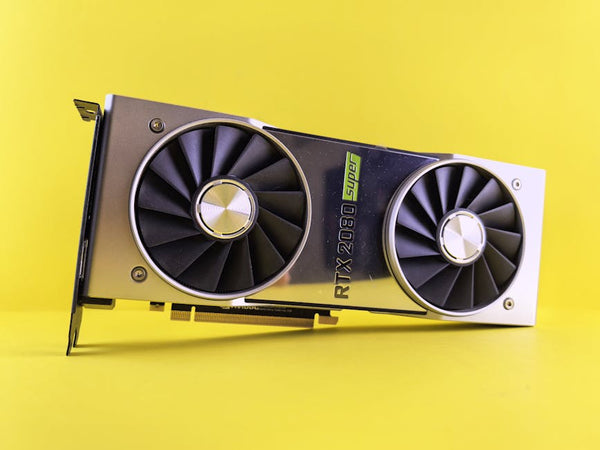
Hot take: for most gamers, probably not. The improvements are real but situational, and that $100 price difference could go toward a better GPU instead. A bump from an RTX 4070 Ti to an RTX 4080 is going to give you way more noticeable performance gains than switching from the 9950X3D to the 9950X3D2.
But there are exceptions. If you're building a high-end PC build guide system around strategy gaming, content creation, and you want the absolute best frame time consistency money can buy, the dual cache setup delivers on its promises.
The question isn't whether the 9950X3D2 is better. It is. The question is whether it's $100 better for your specific use case.
Honestly? I'm more excited to see where this dual cache technology goes in future generations. Right now it feels like a proof of concept that AMD is charging premium prices for. Give it another generation or two, and we might see this tech trickle down to more affordable price points where it makes real sense.
For now, unless you're absolutely sure you need every last bit of cache performance, your money's probably better spent elsewhere in your build. The 9950X3D is still a monster chip, and those extra frames from a GPU upgrade are going to be way more noticeable than marginal cache improvements.


























Leave a Comment