


OpenAI's Math Breakthrough: When AI Solves 80-Year Problems (And What That Means for Your Gaming Rig)
Holy crap, OpenAI just did something that's making my brain hurt in the best possible way. Their latest AI model didn't just beat some random benchmark or generate better cat pictures — it actually solved a mathematical problem that's been stumping brilliant humans since the 1940s. We're talking about a theorem that mathematicians have been grinding on for eight decades, and an AI just casually figured it out like it was calculating DPS in an MMO.
But here's the kicker. This isn't just some abstract math flex that doesn't affect us regular folks. This breakthrough gives us a glimpse into where computing power is heading, and honestly? It's got me thinking about what kind of hardware we'll need to keep up with this AI revolution that's clearly not slowing down anytime soon.
The Math Problem That Broke Mathematicians (But Not AI)
Alright, so what exactly did OpenAI solve? Without getting too deep into the mathematical weeds, they cracked a problem related to combinatorial geometry that's been unsolved since 1943. Think of it like this: imagine if there was a rare Magic: The Gathering card that collectors knew existed but nobody could find for 80 years, and then someone just casually pulls it from a random booster pack.
The problem involved something called the "cap set problem" in high dimensions. Basically, mathematicians were trying to figure out the largest possible set of points in a certain mathematical space where no three points form what's called an arithmetic progression. Sounds boring? Maybe. But solving it required computational approaches that would make your RTX 4090 weep.
What makes this absolutely wild is that OpenAI's model didn't just brute-force its way through calculations. It actually developed new mathematical insights and proof techniques that human mathematicians are now studying to understand how the AI "thought" about the problem. It's like watching someone solve a Rubik's cube blindfolded using moves you've never seen before.
Why This Took 80 Years to Crack
Here's the thing about really hard math problems — they're not just difficult because they require lots of calculations. They're difficult because they require insight, creativity, and the ability to see patterns that aren't obvious. For eight decades, some of the smartest people on the planet tackled this problem using traditional mathematical approaches, and they all hit the same walls.
The computational requirements alone were staggering. We're talking about exploring mathematical spaces with dimensions that make 3D graphics look like stick figures. Even with modern supercomputers, the brute-force approach would take longer than the age of the universe. No joke.
What This Means for Gaming Technology and Your Next Build
Now you're probably thinking: "Cool story Alex, but what does this have to do with my gaming setup?" Fair question. Let me break it down.
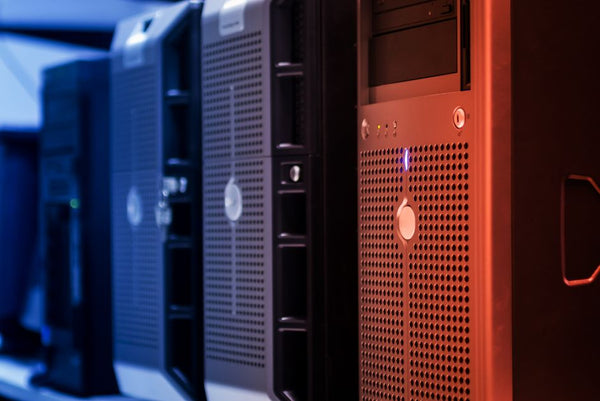
First off, the computational power required to train and run these advanced AI models is absolutely bonkers. We're talking about AI systems that need hundreds of thousands of high-end GPUs working together. When I was helping a customer at TieredUp Tech in Orange, TX configure their build last week, we were discussing how even a single RTX 4090 can struggle with some AI workloads, and that's just for hobbyist-level stuff.
But here's where it gets interesting for gamers. The same mathematical breakthroughs that helped solve this 80-year-old problem are going to trickle down into gaming in ways we can't even predict yet. Better AI opponents that actually think creatively? Procedural generation that creates worlds so complex they feel truly alive? Graphics optimizations that squeeze performance out of hardware we thought was already maxed out?
The Hardware Implications Are Massive
Personally, I think we're about to hit an inflection point where AI workloads become as important as traditional gaming performance when choosing components. It's not just about frame rates anymore — it's about having hardware that can handle the AI-powered features that are coming to games whether we're ready or not.
Consider this: NVIDIA's latest GPUs aren't just faster at ray tracing than their predecessors — they're specifically designed with AI acceleration in mind. The RTX 4090 has 83 billion transistors specifically because AI workloads demand that kind of parallel processing power. And if OpenAI can solve 80-year-old math problems today, what are they going to accomplish with tomorrow's hardware?
"The gap between what AI can do today versus what it could do with better hardware isn't linear — it's exponential."
This is where things get a bit uncertain, tbh. Nobody really knows how much computational headroom we'll need for the next generation of AI-powered applications. It's like trying to spec a gaming PC in 2010 for games that wouldn't exist until 2020. You can make educated guesses, but you're probably going to be wrong about something important.
Building for an AI-Powered Future
So what should you actually do with this information when you're planning your next build? Hot take: don't panic-buy the most expensive hardware thinking you need to future-proof for AI workloads that don't exist yet. But also don't ignore the fact that computational requirements are changing fast.
Here's my practical take on it. If you're building a new gaming rig right now, prioritize components that excel at parallel processing. That means investing in a GPU with plenty of VRAM and computational units, even if it seems like overkill for current games. The RTX 4080 or 4090 aren't just good for 4K gaming — they're insurance policies against future AI features that'll probably show up in games sooner than expected.
CPU choice matters too, but maybe not how you think. While single-core performance still rules for most games, AI workloads love cores. Lots of them. The AMD Ryzen 7 7800X3D is still the gaming king, but something like the Ryzen 9 7900X might age better if AI features become standard in gaming.
Memory and Storage: The Unsung Heroes
Here's something most people miss when thinking about AI-ready hardware: memory bandwidth and storage speed matter way more than you'd expect. AI models are data-hungry beasts that constantly move information around. DDR5-6000 isn't just about slightly better frame rates — it's about having the memory bandwidth to feed AI workloads without bottlenecking.
Same goes for storage. When AI models need to access training data or swap memory, they need it fast. A good Gen4 NVMe SSD isn't just for faster game loading times anymore. It's infrastructure for whatever AI-powered features developers dream up next.
Want to future-proof your build properly? Build your custom gaming PC with BitCrate and focus on components that excel at parallel workloads, high memory bandwidth, and fast data access. It's like building a deck in TCGs — you want cards that work well in the current meta but also have synergy potential for future expansions.
The Bigger Picture: When Machines Think Better Than Us
Look, I'll be real with you. OpenAI solving an 80-year-old math problem is simultaneously awesome and a little terrifying. We're not just talking about incremental improvements anymore — we're watching AI systems develop genuine problem-solving abilities that surpass human mathematicians in specific domains.
What happens when this level of AI capability becomes accessible to game developers? We might see procedural content generation that creates genuinely novel gameplay mechanics. AI opponents that learn and adapt in ways that make today's "smart" AI look scripted and predictable. Virtual worlds that evolve and change based on collective player behavior in ways that would be impossible to program traditionally.
The math problem OpenAI solved isn't just about mathematics. It's proof that we've crossed a threshold where AI can make genuine intellectual breakthroughs in domains that require creativity, insight, and pattern recognition. That's not just number-crunching — that's something approaching actual thinking.
And honestly? That changes everything about how we should think about our gaming hardware. Because the bottleneck isn't going to be whether your GPU can push enough pixels anymore. It's going to be whether your entire system can keep up with AI that thinks faster and more creatively than the humans who programmed it.
The future just got a lot more interesting. And a lot more computationally expensive.


































Leave a Comment