


Cameras, Sensors, and 3D Body Scans: All the Tech News Eliminating Blown Calls
Refs suck. We've all screamed it at our screens during World Cup matches when a clear offside gets missed or VAR takes five minutes to review an obvious handball. But this year's tournament? Different story entirely.
The gaming technology revolution isn't just hitting our PCs and consoles anymore — it's completely transforming how sports officiating works. We're talking cameras that track every pixel of movement, sensors reading player positions down to the centimeter, and 3D body scans creating digital twins of each athlete. Honestly, it makes my RTX 4090 setup look basic in comparison.
Semi-Automated Offside Detection: Gaming Tech News Meets The Pitch
Remember those frame-perfect inputs in fighting games? That split-second timing that separates pros from casuals? FIFA's new semi-automated offside system operates on the same principle, except instead of detecting a quarter-circle forward punch, it's tracking 29 data points on every player's body at 50 times per second.
The setup is honestly wild. Twelve dedicated cameras mounted around the stadium create a real-time 3D map of every player. Each ball gets an inertial measurement unit sensor that transmits position data 500 times per second. When I explain this to customers at our shop in Orange, TX, they always ask if their gaming rig could handle that kind of data processing. Short answer? Not even close.
Here's the kicker though — the system doesn't just detect offside positions. It creates a digital twin of each player that refs can view from any angle imaginable. Think photo mode in your favorite racing game, but for real-world soccer plays. Refs can literally pause time and walk around a frozen moment to see exactly what happened.
How Fast Is "Real-Time" Really?
We throw around "real-time" like it means something, but FIFA's system processes offside calls in under three seconds from the moment of contact. That's faster than most of us can even react to a flash grenade in CS2. The AI analyzes the data, generates the 3D visualization, and sends an alert to the video assistant referee before most players have even finished celebrating.
But here's where it gets interesting — and honestly a bit concerning. The system isn't making the final call. It's just providing data to human refs who still make the decision. So we're basically creating the most sophisticated gaming technology on the planet to... help humans make slightly better guesses?
Digital Twins: When Sports Meet RPG Character Models
Digital twins sound like something straight out of Cyberpunk 2077, but they're becoming standard practice in professional sports. Each player gets a detailed 3D model that updates in real-time based on camera and sensor data. Think of it like having a hyper-accurate character model that perfectly mirrors your movements in-game.
The tech behind this is legitimately impressive. Multiple camera angles capture player movements from every possible perspective. Machine learning algorithms process this visual data to create accurate body positioning. Advanced motion capture technology tracks limb movements with sub-centimeter precision. It's like having motion capture suits on every player without actually wearing anything.
Personally, I think this is where sports officiating should've been years ago. We've had the tech to eliminate human error in calls for a while now — we just haven't been willing to implement it properly. Why are we still debating whether a ball crossed a line when we have sensors that can tell us down to the millimeter?
The Camera Array That Never Blinks
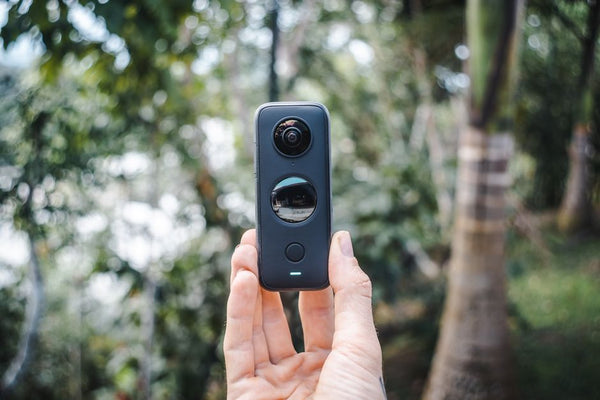
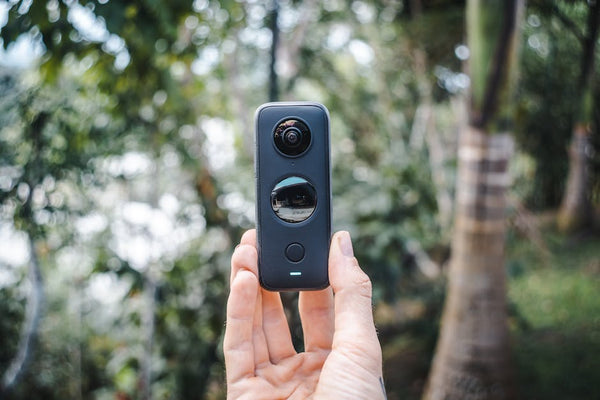
Twelve cameras doesn't sound like much until you realize they're not your typical broadcast cameras. These are specialized tracking cameras with custom lenses designed specifically for player monitoring. Each camera captures footage at extremely high frame rates — we're talking 200+ FPS minimum.
The positioning is crucial too. Cameras are strategically placed to eliminate blind spots and ensure continuous tracking of all players. When one camera loses sight of a player due to obstruction, another immediately picks up the tracking. It's like having omniscient vision across the entire pitch.
Processing this much visual data requires serious computational power. We're looking at dedicated server farms running specialized algorithms just to track player movements. Makes me appreciate how much easier it is to build your custom gaming PC with BitCrate for regular gaming compared to this enterprise-level stuff.
Sensor Technology That Makes Gaming Peripherals Look Primitive
That Adidas ball isn't just leather and air anymore. The official match ball contains an inertial measurement unit that tracks its position, speed, and rotation in three-dimensional space. This sensor transmits data 500 times per second to receivers positioned around the stadium.
Think about that for a second. Your gaming mouse probably has a polling rate of 1000Hz, which we consider high-end. This soccer ball is transmitting positional data at 500Hz while being kicked around a field by professional athletes. The precision required for that kind of tracking is insane.
Hot take: this sensor tech is more advanced than anything we're using in competitive gaming right now. Our mechanical keyboards and precision mice feel ancient compared to a soccer ball that can tell you its exact position in space 500 times every single second.
Beyond Ball Tracking
But the ball sensor is just one piece of the puzzle. Players wear GPS tracking devices that monitor their positioning, speed, and movement patterns throughout the match. These aren't bulky devices either — we're talking about lightweight sensors integrated into their gear that they probably don't even notice.
The data collection is comprehensive. Distance covered, sprint speed, acceleration patterns, heat maps showing field positioning — it's like having detailed gameplay statistics for every player in real-time. Imagine if CS2 tracked your exact position, aim movement, and reaction times with this level of precision.
Machine Learning Algorithms: The AI Referee Assistant
Here's where things get really sci-fi. The system doesn't just collect data — it learns from it. Machine learning algorithms analyze thousands of previous plays to understand normal movement patterns, typical offside scenarios, and edge cases that human refs might miss.
The AI can predict potential offside situations before they happen based on player positioning and movement trajectories. It's like having an aimbot for referees, except instead of landing headshots, it's catching rule violations with superhuman accuracy.
But — and this is important — the AI isn't making calls independently. It's providing analysis and recommendations to human officials who make the final decisions. We're still keeping humans in the loop, which honestly might be the smart play for now.
Training Data From Millions of Plays
These algorithms have been fed data from countless matches, training on every conceivable scenario. Tight offside calls, player obstruction, ball contact timing — the system has seen it all. The more data it processes, the better it gets at identifying problematic situations.
It's like training an AI to play Starcraft by feeding it millions of professional matches. Except instead of learning build orders and micro management, it's learning the subtle nuances of soccer rules and player positioning.
Real-World Performance: Does It Actually Work?
Early results are promising but not perfect. The semi-automated offside system has successfully identified questionable calls that human refs missed. Response times are faster than traditional VAR reviews. Player and fan satisfaction has improved in tournaments where it's been implemented.
However, there are still edge cases where the technology struggles. Complex player interactions, unusual body positioning, and equipment malfunctions can cause issues. The system is incredibly sophisticated, but it's not infallible.
Honestly, I'm impressed with how well it's working considering the complexity involved. We're talking about tracking 22 players moving at high speeds in real-time while making split-second decisions about rule violations. That's a computational challenge that would break most systems.
The question isn't whether this tech will replace human referees — it won't. But it's definitely changing how officiating works at the highest levels of professional sports. And tbh, it's about time we started using our gaming technology advances to fix problems in the real world.
Next time you're watching the World Cup and see a lightning-fast offside call, remember there's more computing power focused on that single moment than most of us have in our entire gaming setups. Now that's what I call next-level performance optimization.















































Leave a Comment