


Take-Two's CEO Drops Truth Bombs About AI in Gaming: Why Your Favorite New Games 2025 Won't Be Made by Robots
Strauss Zelnick just said what we've all been thinking. Take-Two's CEO basically told AI to sit down when it comes to making actual hits. His exact words? "Datasets by their very nature are backward looking." Translation: AI can't predict what's gonna slap in 2025 because it's too busy looking at what worked in 2018.
Honestly, this hits different when you think about it. Every revolutionary game that made you lose sleep — think Rocket League, Fall Guys, or Among Us — came outta nowhere. No dataset predicted those would blow up. They weren't iterations on existing formulas.
Why AI Can't Make the Next Big PC Game Release
Here's the thing about creativity that Zelnick nailed. Clones don't sell. Period. Sure, Battle Royale games exploded after PUBG, but how many actually survived? Fortnite succeeded because Epic took the formula and completely flipped it with building mechanics. That's human creativity, not pattern matching.
AI looks at data and says "zombie games sold well, make more zombie games." But it can't tell you that players are actually craving something fresh. It can't predict that a physics-based party game like Gang Beasts would become a streaming phenomenon. The algorithm doesn't account for that one streamer who makes your game go viral because they found a hilarious bug.
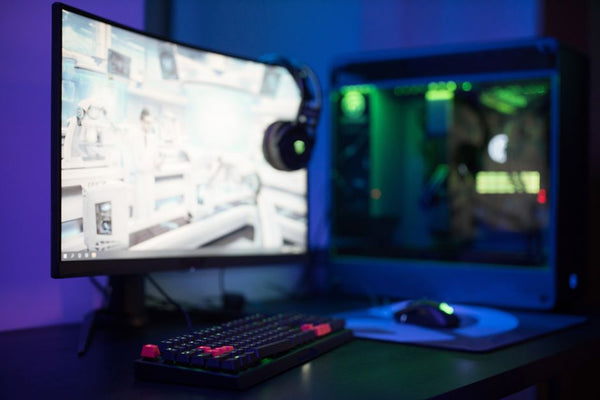
Working at TieredUp Tech in Orange, TX, I see this firsthand. Customers don't come in asking for "the statistically most successful gaming rig." They want builds that'll run whatever weird indie game catches their eye next. They're chasing experiences, not spreadsheets.
The Data Problem With Predicting Gaming Hits
Let's get real about what "backward looking" means. When AI analyzes successful games, it's seeing patterns from 2-5 years ago minimum. That's how long game development takes. By the time that AI-generated game hits market, those trends are dead.
Remember when everyone thought hero shooters were the future because Overwatch dominated? AI would've greenlit fifty Overwatch clones. Meanwhile, the market moved toward extraction shooters like Tarkov and Hunt: Showdown. Then battle royales evolved into Apex Legends' movement-based gameplay.
The gaming landscape shifts faster than AI can adapt. What dataset could've predicted that Hades would outsell most AAA releases in 2020? A roguelike with hand-drawn art and Greek mythology wasn't exactly trending in the data.
Where AI Actually Helps (And It's Not What You Think)
But here's where Zelnick gets nuanced — and honestly, smart as hell. He didn't say AI is useless. He said it's "super helpful" just not at the creative core.
AI absolutely crushes at optimization. Procedural texture generation, NPC behavior patterns, dynamic difficulty adjustment — that's where the tech shines. It's handling the grunt work so developers can focus on the vision. Think about it: would you rather have artists spending weeks on rock textures, or let AI handle that while they design unique character animations?
Personally, I think AI's biggest win is in QA and bug detection. Machine learning can catch edge cases that human testers miss. It can simulate thousands of player behaviors simultaneously. That's not creativity — that's computational muscle.
Performance and Polish: AI's Sweet Spot
The real magic happens when AI tackles technical challenges. Frame rate optimization based on hardware configurations? Perfect AI job. Dynamic loading systems that predict what assets you'll need next? Again, pattern recognition excels here.
When someone walks into our shop looking to build their custom gaming PC with BitCrate, they're not just buying hardware. They're investing in experiences we can't predict yet. The best builds handle unknown games gracefully, not just current benchmarks.
AI can help optimize games for different hardware configurations, reduce stuttering, and improve compatibility. That's valuable work that directly impacts your gaming experience. But it's not making the next Elden Ring.
What This Means for New Games 2025 and Beyond
Hot take: this AI limitation is actually good news for gamers. It means studios can't just feed algorithms and expect hits. They still need vision, risk-taking, and genuine creativity.
The games that'll dominate 2025 are probably in development right now, created by teams willing to bet on weird ideas. Not because data suggested it, but because someone said "what if we tried this crazy thing?"
Will AI assist in making these games better, faster, more polished? Absolutely. But the core concepts, the breakthrough mechanics, the emotional hooks — those come from humans who understand what other humans actually want to play.
Think about your favorite games from the past few years. How many were predictable? Valheim caught everyone off guard. Phasmophobia became a streaming sensation. Vampire Survivors revived bullet hell games nobody asked for. These weren't data-driven decisions.
The Human Element That Datasets Miss
Here's what really gets me excited about Zelnick's take: it validates the chaotic, unpredictable nature of gaming culture. The memes, the speedrun communities, the modding scenes — none of that shows up in development datasets.
AI can't predict that Skyrim would still be relevant thirteen years later because modders kept it alive. It can't foresee that a game like Getting Over It with Bennett Foddy would spawn an entire genre of rage games. Cultural moments don't fit into algorithms.
The best developers understand this. They're not chasing metrics; they're chasing feelings. That moment when a game just clicks, when mechanics feel perfect, when you lose track of time — that's human intuition meeting human needs.
So yeah, AI will make games run smoother, look prettier, and test more thoroughly. But the next game that keeps you up until 4 AM? That's still gonna come from some developer who had a wild idea and decided to build it anyway. No dataset required.























Leave a Comment