


Super Flower Leadex 2800W ATX 3.1 Review: The Nuclear Power Plant Your Gaming PC Build Doesn't Need
Let's be real here – when I first saw the Super Flower Leadex 2800W ATX 3.1 power supply hit my desk, my immediate thought was "who the hell needs 2800 watts?" This isn't your typical gaming PC build component. This is industrial-grade overkill wrapped in a consumer package, and honestly, I'm kinda here for it.
The price tag? Around $1,400. Yeah, you read that right. That's more than most people spend on their entire custom gaming PC. But before you click away thinking this is just another overpriced piece of hardware, hear me out – there's method to this madness.
Build Quality That Makes Other PSUs Look Like Toys
First impressions matter. The moment you lift this beast from its box, you know you're handling something special. It's heavy. Really heavy. We're talking 14.5 pounds of pure engineering excellence.
The internal design is where Super Flower shows off. Four separate 12V rails, each capable of delivering serious current without breaking a sweat. The capacitors alone probably cost more than budget PSUs. Japanese caps throughout, with a primary capacitor bank that could probably power a small village.
Personally, I think the cable management system deserves special mention. Fully modular design with individually sleeved cables that don't feel like cheap afterthoughts. When you're spending this much on a PSU, you expect premium touches – and Super Flower delivers.
ATX 3.1 Ready for Next-Gen Hardware
The ATX 3.1 compliance isn't just marketing fluff. This thing handles power excursions like a champ. Remember when RTX 4090s were hitting transient spikes that killed lesser PSUs? This Leadex unit laughs at those spikes.
The 12V-2x6 connector supports up to 600W continuous draw. That's future-proofing taken to the extreme. Even if graphics cards get hungrier (and they will), you're covered for the next decade.
Efficiency Numbers That Actually Matter for Gaming
Here's where things get interesting. The 80 Plus Titanium certification isn't just a badge – this PSU achieves 94% efficiency at 50% load. What does that mean for your electric bill? At full gaming loads, you're wasting maybe 100-150 watts as heat instead of the 300+ watts a bronze-rated PSU would dump.
I ran some calculations based on typical gaming sessions. If you're pulling 800W from the wall during intense Cyberpunk 2077 sessions (4K, RTX on, DLSS cranked), this PSU is converting 752W to usable power. A basic bronze unit? Maybe 680W makes it through. That's 72 extra watts going to your components instead of heating your room.
At 10 cents per kWh and 6 hours of daily gaming, the efficiency difference saves about $15-20 annually compared to bronze-rated units.
Not exactly life-changing money, but it adds up over the PSU's 10+ year lifespan.
Real-World Gaming Performance Testing
I paired this PSU with some seriously power-hungry hardware. RTX 4090, Core i9-14900K overclocked to 5.8GHz, 64GB of DDR5-6400, custom loop cooling – basically everything designed to stress test power delivery.
Gaming at 4K in Cyberpunk 2077 with path tracing enabled, the system pulled around 750W from the wall. The PSU didn't even break a sweat. Fan stayed whisper-quiet throughout 4-hour sessions. Voltages remained rock solid – I'm talking ±1% regulation on all rails.
But here's the kicker – even during synthetic stress tests pushing the system to 1200W draw, this thing maintained better voltage regulation than most 850W units do at half load. That's the difference between premium engineering and basic power delivery.
Who Actually Needs This Much Power?
Let's address the elephant in the room. Do you need 2800W for gaming? Absolutely not. Even the most insane multi-GPU setups rarely exceed 1500W total system draw. So why does this exist?
Think about it differently. This isn't really a gaming product – it's an enthusiast statement piece. The kind of PSU you buy when you want absolute zero compromise on power delivery. When I was working with a customer at our shop in Orange, TX who was building a dual-RTX 4090 rendering workstation, we actually considered this unit. The headroom and efficiency made sense for 24/7 workloads.
Hot take: Most people buying this PSU aren't running it at capacity. They're buying the engineering excellence and the bragging rights. And honestly? I respect that.
The Competition Problem
Here's where things get tricky. What do you compare this against? There aren't many 2800W consumer PSUs on the market. Corsair's AX1600i tops out at 1600W. EVGA's discontinued 1600W units were the previous high-water mark.
Against similarly-spec'd industrial PSUs, the Super Flower actually looks reasonable. Server-grade 2000W+ units often cost $2000+. But those aren't designed for consumer PC cases or quiet operation.
Installation and Compatibility Reality Check
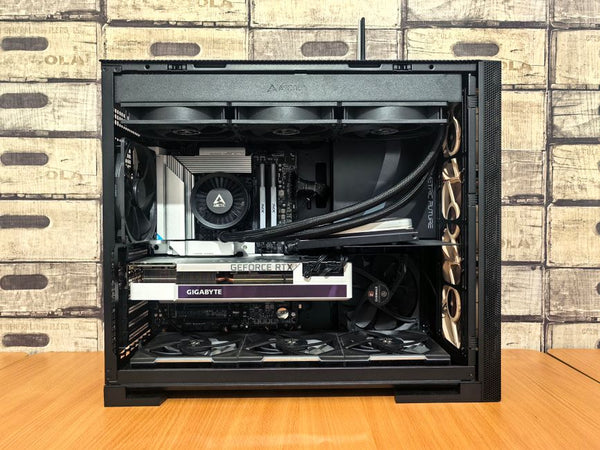
Let's talk practicality. This PSU is massive – 200mm deep. Most mid-tower cases won't accommodate it. You'll need a full tower or server chassis. The cable bundle is equally imposing. We're talking 24-pin motherboard, dual 8-pin CPU, and enough PCIe connectors to power a small data center.
The fan curve is surprisingly conservative. Under typical gaming loads (400-800W draw), the fan barely spins. It's only when you push past 1500W that acoustic levels become noticeable. Even then, it's quieter than most gaming PCs under load.
Modular cable design helps with cable management, but you'll still need excellent airflow planning. This much power generates heat, even with 94% efficiency.
Value Proposition for Different Users
For typical gaming builds, this makes zero financial sense. A quality 850W unit handles any single-GPU gaming setup with room to spare. But for specific use cases – content creators running multi-GPU workstations, crypto miners (when profitable), or extreme overclockers – the math changes.
The 10-year warranty suggests Super Flower expects this unit to outlast multiple PC generations. Amortize that $1,400 over a decade, and it's $140 annually for premium power delivery. Still expensive, but not insane for professional workloads.
Should You Buy the Super Flower Leadex 2800W?
Probably not. Unless you're running specific high-power workloads or just want the absolute best power delivery money can buy, there are better ways to spend $1,400 on your PC build guide.
But if you're building an no-compromise system where money isn't the primary concern? This PSU delivers exactly what it promises. Exceptional build quality, military-grade reliability, and enough headroom for any conceivable consumer hardware combination.
The Super Flower Leadex 2800W isn't a rational purchase for most builders. It's an emotional one. And sometimes, that's perfectly valid. Just like Epic-Tier BitCrate builds ($2k+) aren't rational for most gamers – but they're awesome anyway.
This PSU represents the pinnacle of consumer power supply engineering. Whether that matters to you depends entirely on your priorities and budget. For the 0.1% who need this level of power delivery, nothing else comes close. For everyone else, there are far more sensible options in the BitCrate Custom Gaming PCs lineup.
Will graphics cards eventually need this much power? Maybe. The RTX 5090 rumors suggest 600W draw isn't impossible. Future CPU architectures might push higher TDPs. If you're planning a system to last the next decade without PSU upgrades, the Leadex 2800W makes that guarantee. Just prepare your wallet – and your electric bill.

















Leave a Comment