


Spray-On Stealth Coating for Drones: A GPU Review Perspective on Real-World Tech Innovation
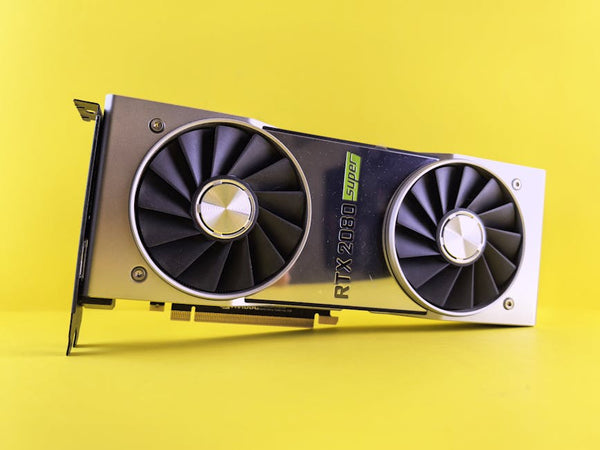
Remember when we thought ray tracing was science fiction? Now your RTX 4090 renders reflections faster than my old GTX 1060 could boot Windows. Well, researchers just dropped something that makes graphics card innovation look predictable: a literal spray-on invisibility cloak for drones that cuts radar signatures by 43dB. That's like comparing a whisper to a rock concert.
This volcanic rock-based coating isn't just incremental improvement — it's destroying the competition harder than AMD's RX 7900 XTX demolished NVIDIA's 4080 pricing strategy. Traditional radar absorbent materials (RAM) typically manage 20-30dB reduction. This new stuff? 43dB. In TCG terms, that's like pulling a Black Lotus when everyone else is running basic lands.
Breaking Down the 43dB Performance Benchmark
Let's talk numbers because gamers love benchmarks. Decibels aren't linear — they're logarithmic. A 43dB reduction means the radar return signal is roughly 20,000 times weaker than without coating. Think of it this way: if your drone's radar signature was a fully lit RGB gaming rig drawing 850 watts, this coating makes it look like a single LED drawing 0.04 watts.
Traditional RAM materials hitting 20-30dB reduction? That's solid performance, don't get me wrong. But 43dB is absolutely busted in the best way possible. It's like comparing integrated graphics to a dedicated GPU — technically they both render images, but the performance gap is astronomical.
The volcanic rock formulation creates microscopic structures that scatter radar waves instead of reflecting them back. Similar to how anti-reflective coatings work on monitor screens, except instead of reducing glare for your eyes, it's hiding aircraft from military radar systems.
Why Volcanic Rock Makes Perfect Sense
Volcanic rock brings natural porosity and unique mineral composition. These characteristics create irregular surfaces at the microscopic level — perfect for breaking up radar waves. It's honestly genius when you think about it. Nature spent millions of years perfecting this material's structure, and now engineers figured out how to weaponize those properties.
The spray-on application method changes everything too. No more complex manufacturing processes or specialized facilities. Just mask off your electronics, spray, wait for it to cure, and boom — stealth mode activated. Reminds me of when GPU manufacturers switched from requiring custom cooling solutions to standardized mounting systems.
Real-World Gaming Performance Implications
This tech got me thinking about military simulation games and how they'll need updating. DCS World's radar modeling already struggles with modern stealth characteristics. How do you program realistic detection ranges when drones become this invisible?
Flight sim enthusiasts are gonna lose their minds. Imagine MSFS 2024 incorporating realistic stealth mechanics where your aircraft's radar cross-section actually matters for multiplayer scenarios. The modding community would go absolutely wild creating custom scenarios around this tech.
Honestly, this reminds me of when DirectStorage finally dropped and nobody knew how to properly implement it at first. Revolutionary technology often takes time for software to catch up with hardware capabilities.
The Survivability Factor
Military applications aside, civilian drone operators face increasing airspace restrictions and tracking requirements. While this coating won't help you bypass legal requirements (please don't try), it demonstrates how rapidly anti-detection technology evolves.
Search and rescue operations could benefit enormously. Drones equipped with this coating might avoid interfering with other radar systems during emergency responses. Wildlife researchers studying sensitive animal populations could conduct observations without electronic signatures spooking their subjects.
Comparing This Innovation to CPU Benchmark Evolution
This breakthrough feels similar to when AMD dropped the original Ryzen architecture. Intel dominated for years with incremental improvements, then BAM — Ryzen completely reshuffled the market. This volcanic rock coating could trigger similar disruption in stealth technology.
The accessibility factor really sets this apart. Remember when overclocking required physical jumpers and BIOS modifications? Now you just download MSI Afterburner and move some sliders. This spray-on coating democratizes stealth technology the same way — no specialized equipment or extensive training required.
I was talking to a customer at our shop here in Orange, TX last week about how technology adoption curves keep accelerating. GPU architectures that would've lasted five years now get replaced in two. This coating tech might follow similar patterns — rapid iteration and improvement cycles.
Manufacturing and Cost Considerations
The volcanic rock sourcing advantages can't be overstated. Unlike rare earth elements needed for advanced semiconductor manufacturing, volcanic rock exists everywhere. Iceland, Hawaii, Indonesia — tons of accessible sources without complex supply chain vulnerabilities.
Production scaling shouldn't face the same bottlenecks plaguing GPU manufacturing either. TSMC's 4nm process node requires billion-dollar fabrication facilities. Grinding volcanic rock and mixing it into sprayable coating? Much simpler logistically.
Cost per application will likely drop fast once production ramps up. Think about how SSD prices crashed when NAND flash manufacturing scaled. This coating could follow similar economics.
Technical Challenges and Limitations
Let's be real though — this isn't perfect technology. Spray-on coatings face durability issues, especially on aircraft experiencing high speeds and temperature variations. Will this stuff survive a drone flying through rain at 60mph? Testing will tell.
Weight considerations matter too. Every gram affects flight time and payload capacity. If this coating adds significant mass, operators might prefer shorter flight times over stealth capabilities depending on mission requirements. It's the classic performance versus efficiency trade-off we see in gaming hardware.
Weather resistance becomes critical for practical deployment. Coating that works perfectly in lab conditions but fails after one thunderstorm isn't viable for real-world applications. Personally, I think durability testing will determine whether this becomes mainstream or remains niche.
Regulatory and Ethical Questions
Aviation authorities worldwide will need addressing this technology's civilian availability. Should anyone be able to make their drone nearly invisible to radar? What about air traffic control systems that rely on radar detection for safety?
Export controls will definitely apply to military-grade versions. The same restrictions affecting high-end GPU exports to certain countries will probably cover this coating technology. International relations get complicated when stealth capabilities become easily accessible.
Looking Forward: What This Means for Tech Development
This volcanic rock breakthrough represents broader trends in materials science. Just like how gaming GPUs evolved from simple 2D accelerators to AI-capable compute monsters, stealth technology keeps pushing boundaries in unexpected directions.
The intersection between accessibility and advanced capabilities fascinates me. Complex technology becoming user-friendly typically signals major market shifts. When build your custom gaming PC with BitCrate became as simple as picking components from dropdown menus, PC building exploded in popularity.
Hot take: within five years, this coating technology will spawn an entire ecosystem of consumer applications nobody's considering yet. Marine vessels avoiding wildlife detection systems, automotive applications reducing radar interference, architectural uses for reducing electronic noise pollution.
The research team probably focused on military applications, but consumer markets often drive the most interesting innovations. Gaming hardware wouldn't exist without gamers demanding better performance. Consumer drone markets might push this stealth coating in directions military researchers never imagined.
Ngl, I'm excited to see where this goes. Technology that seemed impossible last year becomes standard equipment tomorrow. Your next drone might come with stealth coating pre-applied, just like how modern graphics cards ship with factory overclocks that would've been considered extreme just a few years ago.



















Leave a Comment