


NASA's New 100x Power Chip Partnership: Will Space Tech Actually Help Your GPU Review Sessions?
So NASA just announced they're teaming up with Microchip Technology to build some absolutely bonkers spaceflight processors that supposedly deliver 100x the computing power of current space-grade chips. Yeah, you read that right. One hundred times. And honestly? My first thought wasn't about Mars missions or lunar bases — it was wondering if any of this tech will ever trickle down to help my CPU benchmark scores stop looking like trash.
Look, I've been building rigs for over a decade now, and I've seen plenty of marketing departments throw around ridiculous multipliers. Remember when AMD claimed their FX-9590 was "the world's first 5GHz processor" while conveniently ignoring that it pulled 220W and thermal throttled if you looked at it wrong? But this NASA partnership feels different.
What Makes Space Chips Actually Different From Your Gaming Rig
Here's the thing most people don't get about space-grade hardware. It's not just about raw gaming performance or hitting those sweet CPU benchmark numbers we obsess over. These chips need to survive literal radiation bombardment for years without a single blue screen.
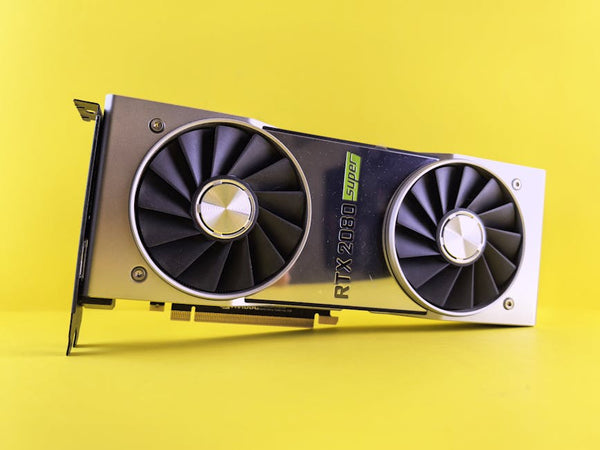
Your RTX 4090 starts crying if the temperature hits 83°C. Space chips? They're designed to handle cosmic radiation that would fry your motherboard faster than you can say "memory leak." We're talking about components that need to function flawlessly while getting absolutely hammered by solar particles, cosmic rays, and temperature swings that make even the worst thermal paste applications look reasonable.
The current space-grade processors are basically running on what amounts to early 2000s computing power. Think Pentium 4 era, but hardened against radiation. NASA's Mars Perseverance rover? It's running on a PowerPC 750 processor that was already ancient when the original Xbox launched. That's not a joke — it's genuinely using tech from 1997.
Why Space Hardware Lags Behind Consumer Tech
The reason space chips are so far behind isn't because NASA engineers don't know what they're doing. It's because radiation-hardening semiconductors is expensive as hell and takes forever. By the time they validate a design, test it, and certify it for spaceflight, consumer hardware has already moved three generations ahead.
This is where that 100x power claim gets interesting. They're not just talking about clock speeds or core counts — they're talking about actual computational throughput while maintaining the same radiation tolerance. If they pull this off, we're looking at space computers that might actually be powerful enough to handle real-time data processing instead of the current "send everything back to Earth and let Houston figure it out" approach.
The Trickle-Down Effect: Will This Help Your Next GPU Review Session?
Hot take: this partnership probably won't directly impact your gaming performance anytime soon. But the technologies they develop? Those could be huge for automotive and aerospace applications here on Earth.
Radiation-hardened doesn't just mean space-proof. It also means incredibly stable under stress. When I was helping configure a workstation build for a client at our shop here in Orange, TX last month, they specifically needed something that could handle 24/7 rendering without any crashes. The techniques NASA uses for space-grade reliability could eventually filter down to professional workstation hardware.
Think about it — if you can make a chip survive Mars radiation for two years, making it survive a crypto mining farm or AI training workload becomes trivial. The thermal management, error correction, and fault tolerance research from this project could legitimately improve data center reliability.
What About Gaming Applications?
Personally, I think the gaming benefits will be more subtle but still real. Better error correction means fewer random crashes during those marathon sessions. Improved thermal tolerance could mean higher sustained boost clocks. The power efficiency gains from space-optimized designs might help with the ridiculous power draws we've been seeing lately.
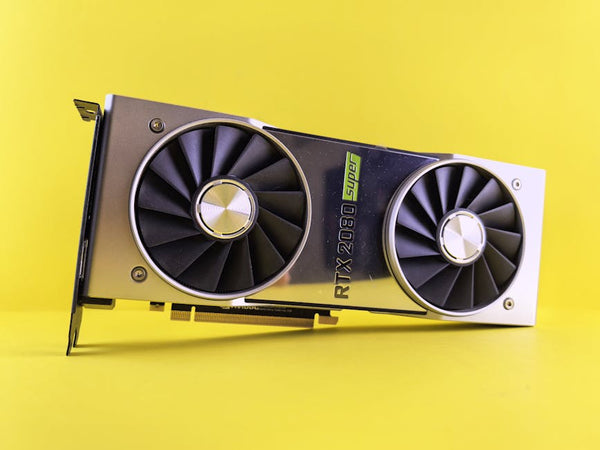
Remember when graphics cards didn't need separate power cables? Those days are long gone, but maybe space-efficient design principles could help us get back to reasonable power consumption. The RTX 4090 pulling 450W is just embarrassing when you think about it.
The Reality Check: Timeline and Expectations
Here's where I need to pump the brakes a bit. NASA projects move at geological time scales. This isn't like waiting for the next GPU generation where you know it's coming in 18-24 months. Space-grade hardware development typically takes 5-10 years from concept to actual deployment.
The partnership announcement is exciting, but we won't see these chips flying to Mars until at least 2030. And the consumer tech benefits? Probably another 3-5 years after that, assuming they actually happen at all.
But honestly? Even if it takes a decade, having NASA pushing the boundaries of computing efficiency and reliability is good for everyone. The Apollo program gave us integrated circuits that eventually became affordable enough for consumer electronics. Maybe this partnership gives us the next breakthrough in processor architecture.
Is It Worth Getting Excited About?
Look, I'm not gonna pretend this changes anything about your current build plans. If you're waiting for the RTX 5080 or wondering whether to upgrade from your 7800X3D, this NASA news doesn't affect those decisions at all.
But as someone who's been watching the industry stagnate in certain areas — how long have we been stuck with basically the same CPU architectures? — it's cool to see serious money going toward fundamental computing innovations again. Space missions demand the kind of reliability and efficiency that could push the entire industry forward.
The automotive applications alone could be massive. Self-driving cars need processors that absolutely cannot fail, and space-grade reliability standards could be exactly what that industry needs. Plus, aerospace applications on Earth deal with similar challenges — high altitude, temperature extremes, electromagnetic interference.
Will this partnership deliver on its 100x performance promise? Honestly, I'm skeptical of any claim that uses round numbers like that. But even if they only hit 20x or 50x while maintaining radiation hardening, that's still a massive leap forward for space computing. And if some of that innovation eventually makes my custom builds more reliable or efficient? I'm here for it.
The real question isn't whether this will revolutionize gaming next year. It won't. The question is whether NASA and Microchip can actually deliver on the ambitious timeline and performance targets they've set. Given the track record of both organizations, I'm cautiously optimistic. But my wallet is staying firmly planted in current-gen hardware for now.


















Leave a Comment