


Building an AI-Powered Gaming PC: What Ukraine's Autonomous Drone Tech Means for Your Next Build
Remember when we thought the biggest AI breakthrough in gaming would be NPCs that didn't walk into walls? Well, Ukraine just proved us wrong. Two years ago, ten autonomous AI-controlled quadcopters dubbed "Terminator" drones went full skynet on Russian forces, marking the first time machines independently decided who lives and dies. No human finger on the trigger. Just pure algorithmic execution.
This isn't science fiction anymore.
As someone who's spent countless hours optimizing gaming PC builds and watching AI evolve from terrible chess opponents to godlike StarCraft players, this news hits different. We're talking about real-world applications of the same neural processing power that's revolutionizing how we game, stream, and create content.
The AI Revolution Isn't Coming — It's Here
These Ukrainian "Terminator" drones didn't just change warfare. They revealed how accessible powerful AI processing has become. Think about it — if military-grade autonomous systems can run on portable quadcopters, what does that mean for your next gaming PC build?
Honestly, this makes me rethink every conversation I've had about "future-proofing" builds. When a customer came into our Orange, TX shop last month asking if they really needed an RTX 4080 for 1440p gaming, I should've been talking about AI acceleration instead of just frame rates.
The computational power behind those autonomous decisions? It's the same architecture powering DLSS 3, real-time ray tracing, and the ChatGPT integrations we're seeing in new games. Your gaming rig isn't just for gaming anymore — it's an AI powerhouse.
Processing Power That Kills (Literally)
Let's break down what makes autonomous AI tick. Those Ukrainian drones needed to process visual data in real-time, identify targets, track movement, and make life-or-death decisions without human intervention. That's essentially what your RTX 4090 does when it's running DLSS Frame Generation — minus the whole "ending lives" part.
The parallel is actually terrifying. And exciting.
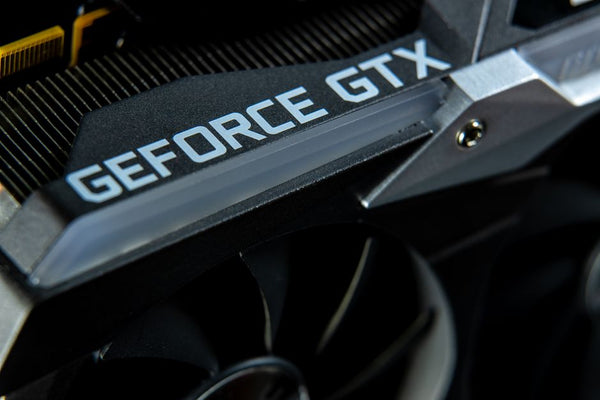
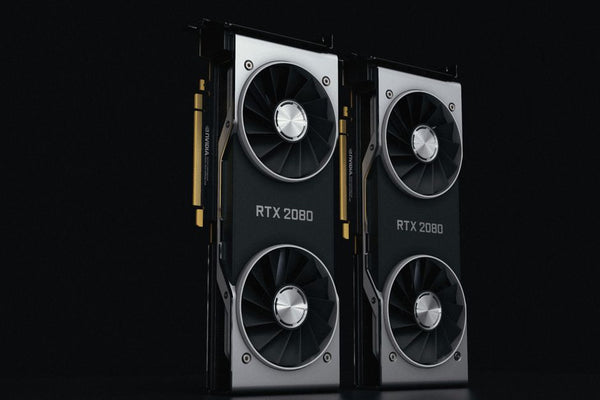
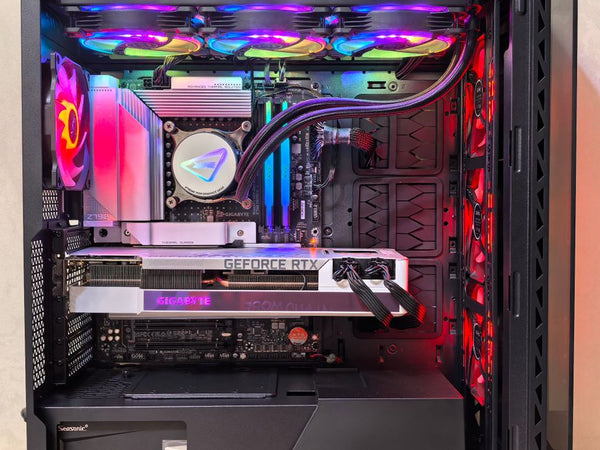
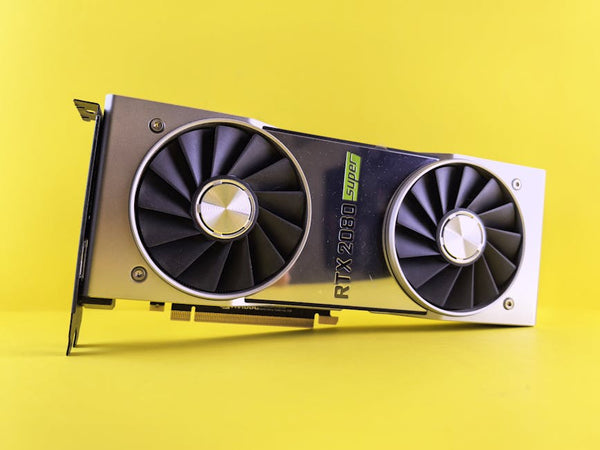
Modern GPUs like the RTX 4080 and 4090 pack tensor cores specifically designed for AI workloads. These aren't afterthoughts — they're the main event. When NVIDIA says their cards deliver 165 TOPS of AI performance, they're talking about the same computational foundation that enabled those autonomous kills.
Building Your Custom Gaming PC for the AI Era
So what does this mean for your next build? Everything, tbh.
Traditional gaming PC guides focus on frame rates and resolution. But if we're entering an era where AI handles everything from game optimization to content creation, your component choices need to reflect that reality.
GPU Selection: Beyond Gaming Performance
Here's my hot take: buying a graphics card based solely on gaming benchmarks is like choosing a TCG deck based only on its artwork. You're missing the actual value.
The RTX 4080 isn't just 15% faster than the RTX 4070 Ti Super in Cyberpunk 2077. It's got 20GB of VRAM compared to 12GB, and nearly double the AI processing power. When AI-enhanced games become standard (and they will), that extra VRAM and tensor performance will matter more than those 20 extra frames you're getting today.
AMD's RX 7900 XTX offers incredible rasterization performance for the price, but its AI acceleration lags behind NVIDIA's offerings. It's like running a powerful artifact deck without the right mana base — technically possible, but you're fighting uphill.
CPU Considerations: The Brain Behind the Machine
Those autonomous drones needed split-second decision-making capabilities. In gaming terms, that's your CPU handling physics calculations, AI behavior, and system-level AI tasks while your GPU renders frames.
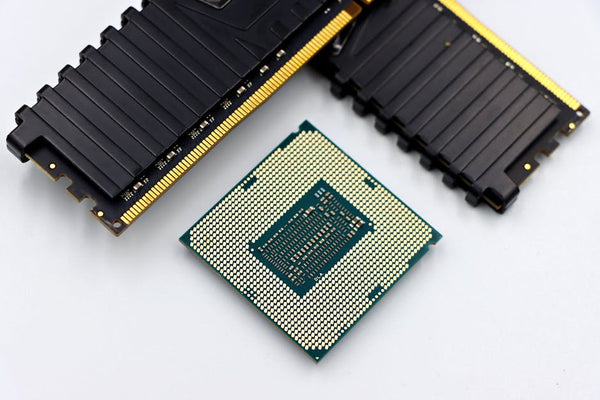
The Intel Core i7-14700K and AMD Ryzen 7 7800X3D both excel here, but for different reasons. Intel's hybrid architecture mirrors how those military AI systems probably operated — high-performance cores for critical decisions, efficiency cores for background processing. AMD's massive cache gives AI workloads the data access they crave.
Personally, I lean toward the 7800X3D for pure gaming builds, but if you're planning to dabble in AI model training or content creation, that 14700K's extra threads start looking mighty appealing.
Memory and Storage: Feeding the Beast
AI is hungry. Ravenous, even.
When I spec'd out a build for streaming and AI upscaling last week, the customer balked at 32GB of DDR5-5600. "Isn't 16GB enough?" Well, sure, if you want your AI models to perform like a mana-screwed control deck.
Modern AI applications can easily consume 20+ GB of system memory. Add in your game, streaming software, and browser tabs, and 16GB becomes a bottleneck faster than you can say "autonomous targeting system."
Storage matters too. NVMe Gen4 drives like the Samsung 980 Pro aren't just for faster load times anymore. AI models need to stream massive datasets, and that 7000 MB/s sequential read speed becomes critical when you're training custom models or running real-time AI enhancement.
The Ethics of AI-Powered Gaming Hardware
Look, I can't write about autonomous killing machines without addressing the elephant in the room. The same tensor cores I recommend for better DLSS performance enabled those "Terminator" drones to make lethal decisions.
Does that make me uncomfortable? Absolutely.
Should it stop us from embracing AI in gaming? That's where I'm genuinely uncertain. The technology exists whether we use it or not. The question becomes: do we guide its development through consumer applications, or do we leave it entirely to military contractors?
When I help customers build used gaming desktops or configure new custom rigs, I'm not just selling hardware. I'm participating in the democratization of AI technology. That feels more responsible than pretending it doesn't exist.
Future-Proofing for an Autonomous World
Gaming hardware evolution used to be predictable. More cores, higher clocks, better graphics. Now we're adding AI acceleration to the mix, and the goalposts keep moving.
Those Ukrainian drones proved that battlefield-ready AI doesn't require server farms. It runs on hardware you can carry. That means the RTX 5080 (whenever NVIDIA decides to release it) will likely pack even more AI horsepower than today's flagship cards.
Building a gaming PC in 2024 means planning for a world where AI handles game optimization, content creation, and player assistance. Your rig needs to be ready for that future, not just today's AAA titles.
Practical Build Recommendations
For a future-ready gaming PC that can handle whatever AI throws at us:
- GPU: RTX 4080 or better (RTX 4090 if budget allows)
- CPU: Ryzen 7 7800X3D or Intel Core i7-14700K
- RAM: 32GB DDR5-5600 minimum
- Storage: 2TB NVMe Gen4 drive
- PSU: 850W 80+ Gold (AI acceleration draws power)
This isn't just about playing Cyberpunk 2077 at 4K. It's about being ready when games start using AI for procedural storytelling, dynamic difficulty adjustment, and real-time world generation.
The Ukrainian defense industry just showed us what's possible when AI gets serious computational resources. Your next gaming PC build should acknowledge that reality — because ready or not, the AI revolution is already here.
Time to level up accordingly.













Leave a Comment