


Why IBM's 1984 Gaming PC Build Memory Revolution Still Matters for Your Custom Gaming PC
Forty years ago, IBM dropped what might be the biggest tech flex of 1984 — the first consumer 1-megabit DRAM chip. While everyone else was stuck with 64-kilobit memory modules (that's like running a Vintage Magic deck in today's competitive scene), IBM basically pulled a Black Lotus out of nowhere. This wasn't just another incremental upgrade. We're talking about a 16x jump in memory capacity that set the foundation for every gaming PC build we configure today.
Think about it this way: if 64KB was a basic Plains card, IBM just dropped an entire fetch land cycle on the market. The ripple effects? Absolutely insane.
From Kilobits to Glory: The Memory Evolution That Changed Everything
Back in '84, most computers were rocking memory setups that'd make your smartphone laugh. We're talking systems with 64KB or maybe 256KB if you were absolutely loaded. Gaming? Well, that mostly meant Pac-Man and early arcade ports that could run on a potato.
IBM's breakthrough meant suddenly you could have systems with multiple megabytes of RAM — which was like having unlimited mana in a world where everyone else was tapping lands for single spells. The implications hit different industries at different speeds, but gaming? Gaming was about to get wild.
Personally, I think this moment doesn't get enough credit in gaming history. Everyone talks about GPUs and processors, but memory capacity? That's what unlocked the possibility of complex game worlds, multiple applications running simultaneously, and the kind of multitasking that modern gamers take for granted.
What This Breakthrough Actually Meant for Gaming
Before IBM's 1-megabit chips, game developers were basically playing Tetris with system resources. Every sprite, every sound effect, every line of code had to fit into impossibly tight memory constraints. It was like building a competitive EDH deck with a $20 budget — technically possible, but you're not exactly bringing your A-game.
The megabit era changed everything. Suddenly developers could:
- Create larger game worlds without constant loading screens
- Include higher-quality audio and graphics
- Design more complex AI systems and game mechanics
- Build games that didn't crash when you tried to save your progress
Hot take: this memory revolution was more important for gaming than the transition from 2D to 3D graphics. Without sufficient RAM, those early 3D games would've been slideshow disasters.
How Memory Lessons from 1984 Apply to Your Modern Gaming PC Build
Here's where things get interesting for anyone planning a custom gaming PC today. The same principles that made IBM's breakthrough revolutionary still apply when you're speccing out your build.
Just last week, I was helping a customer at TieredUp Tech here in Orange, TX figure out their memory configuration. They wanted to know if 16GB was enough or if they should jump to 32GB. My answer? It depends on your gaming habits, but the lesson from 1984 is clear — don't cheap out on memory when you're on the edge of a capacity breakthrough.
The Sweet Spot: Understanding Modern Memory Needs
Today's equivalent of IBM's megabit moment? We're sitting right at the edge of the 32GB standard becoming mainstream. Games like Star Citizen are already pushing 16GB systems to their limits, and that's before you factor in Discord, streaming software, browser tabs, and whatever other apps you've got running.
Think of it like this: in TCG terms, 8GB is like playing Standard with a budget deck — it'll work for casual games, but you're gonna struggle in competitive environments. 16GB is your solid meta deck that handles most matchups. 32GB? That's your no-compromises, every-card-optimized build.
The math gets interesting when you consider price points. DDR4-3200 32GB kits are hitting prices that would've seemed impossible just two years ago. Meanwhile, DDR5 is finally stabilizing enough that it's not just for enthusiasts with deep pockets.
Speed vs. Capacity: The Eternal Memory Debate
Should you prioritize faster speeds or more capacity? This is where IBM's 1984 lesson gets nuanced. They didn't just increase capacity — they maintained decent speeds for the era.
For modern builds, I'm typically recommending DDR4-3200 or DDR4-3600 as the sweet spot for most gaming scenarios. Going faster gets expensive quickly, and the real-world gaming performance gains are often minimal. But capacity? That's where you'll feel the difference day-to-day.
Honestly, I'd rather see someone with 32GB of DDR4-3200 than 16GB of DDR4-4000. The extra capacity gives you headroom for future games, better multitasking, and fewer moments where you're closing applications just to free up memory.
Looking Forward: What's Next for Gaming Memory?
DDR5 is obviously the next big shift, but we're still in that awkward transition period where prices haven't fully normalized. It's like when fetch lands were first printed — everyone knew they'd be format staples, but early adopters paid premium prices.
The real game-changer coming down the pipeline? Games designed specifically for NVMe storage and intelligent memory management. DirectStorage on PC means developers can stream assets directly from fast SSDs, reducing the need for massive RAM buffers.
But here's my prediction: instead of reducing memory requirements, this technology will let developers create even more detailed game worlds. We'll see 64GB becoming the enthusiast standard within the next 3-4 years, just like how 32GB went from "ridiculous overkill" to "yeah, that makes sense" in recent years.
Building Smart: Memory Considerations for 2024
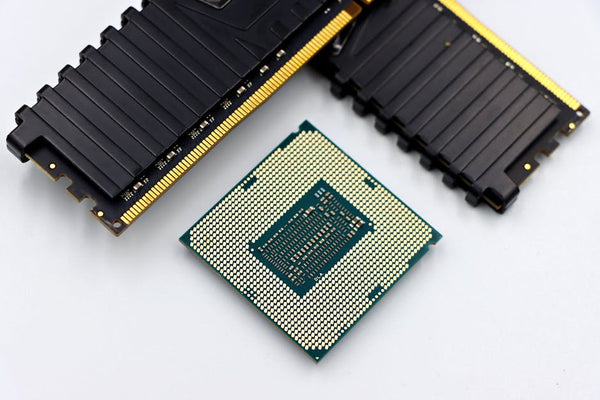
When you're ready to build your custom gaming PC with BitCrate, memory should be one of your priority considerations. Not just capacity, but planning for upgradability.
Going with 2x16GB instead of 4x8GB gives you room to expand to 64GB later without replacing your entire kit. It's like keeping your manabase flexible in a TCG deck — you want options for the future meta.
Also worth considering: memory overclocking has become way more accessible than it used to be. Most modern motherboards can handle basic XMP profiles without any manual tuning, so you're not paying a premium for features you can't use.
The IBM breakthrough of 1984 taught us that memory capacity improvements unlock possibilities we didn't even know we were missing. Today's 32GB builds will probably feel quaint in 2034, but right now? They're the foundation for gaming experiences that would've seemed like science fiction just a few years ago. Choose your memory specs like you're building for the future, because in the PC gaming world, that future arrives faster than you think.









Leave a Comment