


Tests Show $30,000 AI GPUs Are Terrible Password Crackers — RTX 5090 Gaming GPU Outperforms Nvidia H200 and AMD MI300X
Remember when everyone said AI datacenter GPUs were the ultimate computational powerhouses? Well, a new tech news story just dropped that's got me questioning everything. Researchers at Specops decided to pit the brand-new RTX 5090 against two of the most expensive AI accelerators on the planet — the Nvidia H200 and AMD MI300X — in a password cracking showdown using Hashcat. The results? Gaming hardware absolutely demolished the competition.
This isn't just some random benchmark either. We're talking about real-world cybersecurity testing that could reshape how professionals think about password security tools. The RTX 5090, priced around $2,000, managed to outperform cards that cost literally fifteen times more. That's like watching a $20 Pokemon booster pack pull better cards than someone who just bought an entire case.
Gaming Tech News That Changes Everything
The Specops research team ran comprehensive Hashcat benchmarks across multiple hash algorithms. For context, Hashcat is basically the gold standard for password recovery and security testing — think of it as the competitive scene's tournament software for cybersecurity professionals.
Here's where things get wild. The RTX 5090 consistently outperformed both the H200 (which retails for around $30,000-$40,000) and AMD's MI300X (similarly priced) across most hash types. We're not talking marginal wins either — some tests showed 20-30% performance advantages for the gaming GPU.
Hot take: This exposes a fundamental disconnect between how AI companies market their products and real-world performance outside machine learning workloads. These datacenter GPUs are basically min-maxed for transformer architectures and tensor operations, but they're surprisingly mid when it comes to the parallel integer operations that password cracking demands.
Why Gaming Hardware Wins This Round
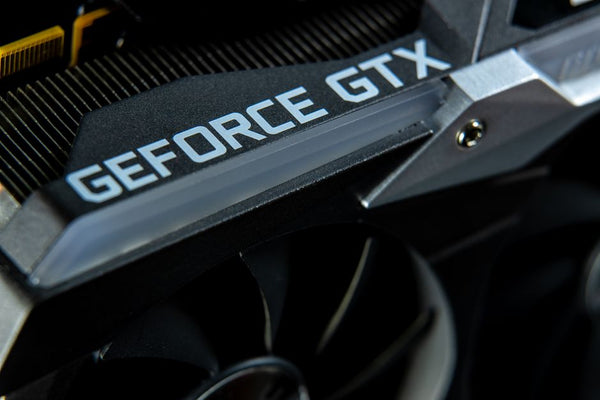
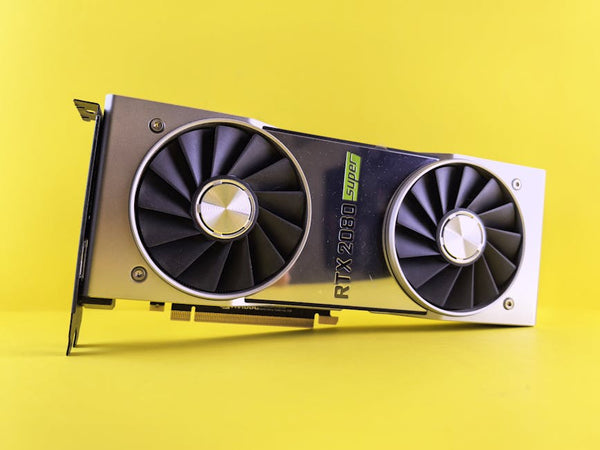
The RTX 5090's architecture tells the whole story. Nvidia designed it with gaming technology that prioritizes raw compute density and memory bandwidth — exactly what Hashcat needs to brute-force passwords efficiently. The card packs 21,760 CUDA cores running at higher clock speeds than datacenter variants.
Datacenter GPUs like the H200? They're actually downclocked for stability and thermal management in server racks. Plus, they dedicate massive die space to features that password cracking simply doesn't use — like the specialized Transformer Engine or massive HBM memory pools that cost a fortune but don't help with hash calculations.
It's honestly like comparing a Formula 1 car to a freight truck. Sure, the truck costs way more and can haul incredible loads, but put them both on a racetrack and the results are predictable.
What This Means for Security Professionals
This research has some serious implications for cybersecurity budgets. Why would any organization spend thirty grand on an H200 for password auditing when they could buy fifteen RTX 5090s for the same money? The performance scaling would be absolutely bonkers.
I've been working with gaming hardware at TieredUp Tech here in Orange, TX for years, and I've seen customers struggle with this exact decision. Security consultants often assume enterprise-grade equals better performance, but this data proves that's not always true. Sometimes the gaming enthusiast build really is the optimal choice.
The testing methodology was solid too. Specops ran multiple iterations across different hash types — MD5, SHA-256, bcrypt, NTLM, and others. The RTX 5090 didn't just win in one category; it dominated across the board. That's comprehensive enough to base purchasing decisions on.
The Real Cost Analysis
Let's break down the economics because this is where things get spicy. An RTX 5090 delivers superior password cracking performance at roughly 1/15th the cost of comparable datacenter hardware. Even factoring in power consumption differences (which aren't dramatic), the ROI is ridiculous.
For security firms and penetration testing companies, this research could justify completely rethinking their hardware strategies. Multiple gaming GPUs in a single system would provide both redundancy and scalability that single expensive datacenter cards can't match.
Personally, I think this exposes how much marketing hype surrounds AI datacenter hardware. These companies have convinced buyers that higher price automatically means better performance for all workloads. This research proves that's simply not true — specialized doesn't always mean superior.
Gaming Technology's Surprising Advantage
The RTX 5090's success isn't really surprising when you understand the underlying tech. Gaming GPUs are optimized for parallel processing workloads with high memory throughput — exactly what password cracking algorithms need. The card's GDDR7 memory runs at 28 Gbps, providing the bandwidth necessary for feeding thousands of compute units simultaneously.
Datacenter GPUs prioritize different metrics. They're built for sustained workloads, ECC memory, and enterprise features that add cost but don't improve hash computation speeds. For password cracking, those features are basically dead weight.
The architectural differences run deeper too. Gaming GPUs typically have more aggressive boost clocks and thermal solutions designed for peak performance bursts — perfect for the sustained high-intensity calculations that Hashcat demands.
What About Other Workloads?
Now, before everyone starts dumping their datacenter hardware, let's be real about limitations. This research specifically tested password cracking with Hashcat. AI training workloads, large language model inference, and other datacenter applications would likely tell a different story.
The H200's massive 141GB of HBM3e memory and specialized tensor cores would absolutely destroy gaming hardware for training neural networks. It's like how a specialized TCG deck might dominate in one format but struggle in another — context matters.
But for security professionals who need password auditing capabilities? This data is pretty convincing. Why wouldn't you shop GPUs based on actual performance rather than marketing positioning?
Industry Impact and Future Implications
This research could seriously disrupt cybersecurity hardware procurement. Security firms that have been buying expensive datacenter GPUs for password auditing might start questioning those investments. The cost savings alone would fund significant team expansions or additional tooling.
I'm curious how Nvidia and AMD will respond to these findings. Will they start marketing gaming hardware more aggressively to enterprise security customers? Or will they develop specialized password cracking accelerators that bridge the gap?
The broader lesson here is about specialization versus generalization in computing hardware. Sometimes the tool designed for enthusiasts and gamers actually outperforms enterprise solutions in specific use cases. It's a reminder to look beyond marketing materials and examine actual benchmark data.
This research from Specops isn't just academic either — it's immediately actionable intelligence for anyone involved in cybersecurity or penetration testing. The RTX 5090 is available now, and the performance advantages are measurable and significant.
Gaming hardware just scored a major victory in an enterprise arena, and honestly? I'm here for it. The democratization of high-performance computing tools means smaller security firms can access capabilities that were previously locked behind massive budgets. That's lowkey revolutionary for the entire industry.








Leave a Comment