


GPU Review Reality Check: Why Taiwan's Market Boom Means Everything for PC Builders
Bro, I need to talk about something that's absolutely wild happening right now. Taiwan's stock market just surpassed the UK's in total value. Yeah, you read that right. A tiny island with less than a quarter of Britain's economy is now worth more on paper than the entire UK stock market. This isn't some random financial news that doesn't affect us — this GPU review and CPU benchmark world we live in? It's about to get very interesting.
See, TSMC alone accounts for over 40% of Taiwan's market value. That's insane. One company. Making chips. For everyone.
The TSMC Reality: Why Every Gaming Performance Discussion Starts Here
Let me break this down for you. TSMC (Taiwan Semiconductor Manufacturing Company) isn't just another chip maker. They're THE chip maker. Your RTX 4090? TSMC made it. Your Ryzen 7800X3D? TSMC. Even Apple's M3 chips? Yep, TSMC.
When I'm doing GPU reviews here at our shop in Orange, TX, literally every high-end card traces back to Taiwan. The AI boom isn't just pumping TSMC's stock price — it's reshaping the entire semiconductor landscape. And guess what that means for gaming performance? Everything.
Hot take: We're witnessing the most significant shift in PC hardware economics since Intel's Pentium days. TSMC's 3nm process node is so advanced that they're basically printing money while everyone else scrambles to catch up.
The Numbers Don't Lie
Taiwan's stock market hit $2.3 trillion in value. The UK? Sitting at about $2.2 trillion. But here's where it gets spicy for us PC builders. TSMC's market cap is roughly $900 billion. That's bigger than Tesla, bigger than Meta, and it's all built on making the chips we desperately need.
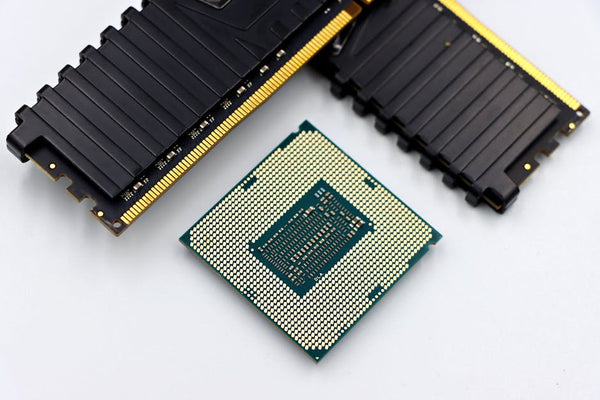
Think about your last CPU benchmark session. Whether you're running Cinebench R23 on a 13900K or watching your 7950X destroy rendering tasks, you're looking at TSMC's handiwork. Their 5nm and 4nm processes are what make modern gaming possible.
What This Market Shift Actually Means for GPU and CPU Performance
Here's where the rubber meets the road. TSMC's dominance isn't just financial flex — it's technological superiority that directly impacts every gaming rig you'll build.
AMD's RDNA 3 architecture? Built on TSMC's 5nm. Nvidia's Ada Lovelace? Same deal. Intel tried going solo with their foundries and honestly? They're still playing catch-up. Their Arc GPUs are decent, but when you're not using TSMC's cutting-edge processes, you're already behind.
Personally, I think we're about to see this advantage compound even harder. TSMC's 3nm process is already in production, and their 2nm is coming in 2025. Meanwhile, Intel's trying to get their 18A process competitive, and Samsung's yields on advanced nodes are... let's just say "not great."
Gaming Performance: The Real Winners
What does this mean for actual gaming? Well, when one company controls the most advanced chip manufacturing on the planet, innovation accelerates fast. Really fast.
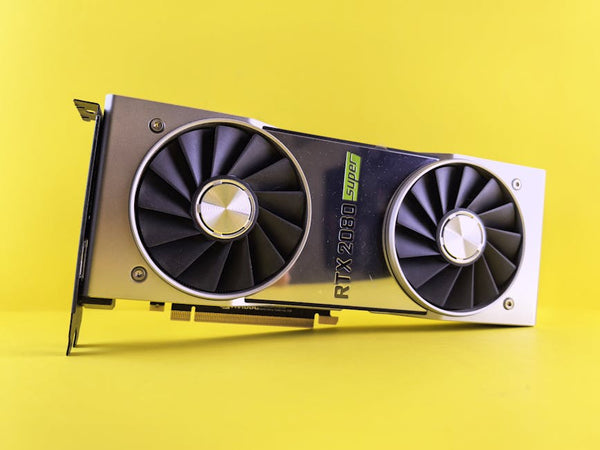
Look at the RTX 4090. That massive die wouldn't be possible without TSMC's 4N process. The efficiency gains, the transistor density — it's all Taiwan magic. Same goes for AMD's 7800X3D, which is absolutely destroying gaming benchmarks right now. That 3D V-Cache technology? Only possible with TSMC's advanced packaging.
But here's the thing that keeps me up at night: what happens when demand outstrips supply even more than it already has?
The AI Elephant in the Room (And Why Gamers Should Care)
The AI boom isn't just driving TSMC's stock price. It's consuming their most advanced manufacturing capacity like crazy. Nvidia's H100 datacenter chips are built on the same processes as gaming GPUs, and guess which customers pay more? Spoiler: it's not us.
I've been tracking GPU availability and pricing for months now, and the pattern is clear. Every time AI demand spikes, gaming GPU allocation gets squeezed. Remember the crypto mining shortage? This could be worse because AI companies have deeper pockets and longer-term commitments.
When I'm helping customers build their custom gaming PC with BitCrate, the conversation always comes back to value and availability. Right now, we're in a decent spot, but Taiwan's market surge is a warning signal.
The Geopolitical Wild Card
Honestly, this is where things get genuinely scary for PC enthusiasts. Taiwan produces over 90% of the world's most advanced semiconductors. If anything disrupts that supply chain — and I mean anything — we're all screwed.
China's been making noise about Taiwan for decades, but with TSMC now representing nearly half of Taiwan's entire stock market value, the economic stakes just got exponentially higher. The US is trying to build domestic chip manufacturing with the CHIPS Act, but we're talking about a 5-10 year timeline to get competitive.
What's a gamer to do? Buy your hardware now if you're planning a build in the next year or two. Seriously.
CPU Benchmark Reality: Where We Go From Here
Here's my prediction: the next two years are going to be absolutely bonkers for PC hardware. TSMC's 3nm process is already powering Apple's M3 chips, and both AMD and Nvidia have designs in the pipeline.
We're talking about potential 30-40% performance improvements in gaming while maintaining similar power consumption. The Zen 5 architecture from AMD and Intel's upcoming Arrow Lake are both targeting TSMC's advanced nodes. Competition is about to get fierce.
But — and this is a big but — pricing is going to reflect Taiwan's new market reality. When your chip manufacturer's stock is through the roof and AI companies are throwing money around like it's Monopoly cash, guess who's paying premium prices?
The Smart Builder's Strategy
Look, I'm not trying to fearmonger here. The tech is amazing, and gaming performance keeps getting better. But the economics have fundamentally shifted. Taiwan's market surge isn't just a financial story — it's reshaping how we think about PC building.
My advice? Stop waiting for the "perfect" moment to upgrade. If you're running hardware that's more than 3-4 years old and you've got the budget, now's the time to move. The RTX 4070 Ti and 7800 XT are both solid choices that'll age well, and CPU prices on AM5 and LGA1700 platforms are finally reasonable.
Taiwan's semiconductor dominance isn't going anywhere. TSMC's technological lead is only growing, and their stock price reflects that reality. For us PC builders, that means incredible performance advances but also higher prices and potential supply constraints.
The question isn't whether Taiwan's chip supremacy will continue — it's whether the rest of the world can build enough alternative capacity before we all become completely dependent on one tiny island. Until then, we're all along for this wild ride, building the best gaming rigs we can while TSMC prints money and pushes the boundaries of what's possible.
Buckle up. The next few years are going to be absolutely mental for PC hardware.














Leave a Comment