


Silent Hill f's Director Lost Sleep Making Horror Games - What Launch Pressure Really Does to Developers
So the director of Silent Hill f couldn't sleep during production. Big surprise there, bro. When you're trying to resurrect one of horror gaming's most beloved franchises after years of mediocre entries, the pressure's gonna hit different. But this got me thinking about something way more interesting than just another stressed-out dev story.
What does this kind of production hell actually mean for us? The gamers dropping $60+ on day one?
The Real Cost of Sleepless Development Cycles
Look, I've been building PCs for over a decade now, and I've seen plenty of customers come into our shop here in Orange, TX completely burned out from crunch culture in tech. Gaming industry's even worse. When directors are losing sleep for months straight, that's not passion - that's panic mode.
Here's what really happens when dev teams are running on fumes and energy drinks. Code gets sloppy. Testing gets rushed. Those weird bugs that make it into final releases? Yeah, they're often the result of 3 AM programming sessions by someone who hasn't seen sunlight in days.
Silent Hill f's director admitting this publicly is actually pretty refreshing, ngl. Most studios just pretend everything's fine until launch day when we discover the game needs a 40GB day-one patch.
Why Horror Games Hit Different for Developers
Creating horror content messes with your head. Period.
Think about it - you're spending 12+ hours a day crafting nightmares, testing jump scares, and fine-tuning psychological terror mechanics. That stuff doesn't just turn off when you go home. I remember talking to a buddy who worked on Dead Space remake, and he said the audio team literally had PTSD from listening to screams and gore sounds for months.
For Silent Hill f specifically, the pressure's doubled. Fans have been waiting since Silent Hill 2 remake rumors started flying around 2020. The franchise has been mostly dormant since PT got cancelled (still salty about that one). So you've got legacy expectations, modern gaming performance standards, and the weight of potentially reviving a dead IP.
That's enough to keep anyone up at night.
Gaming Performance Under Pressure - What This Means for Your Build
Here's where this connects to actual gaming tips and PC optimization. Games developed under extreme pressure often have weird performance quirks. They'll run fine on the dev team's high-end rigs but absolutely choke on mid-range systems.
I've seen this pattern dozens of times. Cyberpunk 2077? Classic example. Developers working insane hours, management pushing unrealistic deadlines, and suddenly your RTX 3070 can't maintain 60fps at 1440p because the optimization got rushed.
Personally, I think we need to start factoring development conditions into our day-one purchase decisions. If a studio's openly admitting their team was sleep-deprived throughout production, maybe wait for the first patch before upgrading your storage for that 100GB install.
Red Flags to Watch For
When developers start talking about sleepless nights and production stress before launch, here's what usually follows:
- Memory leaks that'll crash your system after 2-3 hours of gameplay
- CPU optimization so bad it'll bottleneck even high-end processors
- Graphics settings that don't actually change performance (looking at you, "Ultra" textures that are identical to "High")
- Save corruption bugs because QA testing got compressed into the final two weeks
Not trying to be doom and gloom here, but I've built enough systems to know the patterns. Stressed developers make stressed code.
The Silent Hill f Reality Check
Hot take: I'm actually more optimistic about Silent Hill f because the director was honest about the pressure. Studios that acknowledge development hell usually ship better products than ones pretending everything's perfect.
Remember when Hideo Kojima was openly stressed about Death Stranding? That game launched in surprisingly good technical condition. Compare that to Anthem, where BioWare kept insisting everything was on track right up until the disaster launch.
But let's be real - Silent Hill f isn't dropping until 2025 at the earliest. That gives them time to actually sleep, test properly, and maybe not ship a broken mess. The gaming industry's finally starting to learn that delaying games usually beats releasing garbage and patching later.
What Your Rig Needs to Handle Modern Horror
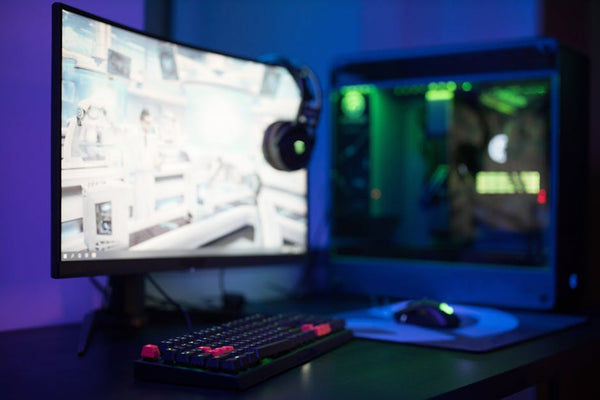
If you're planning to experience Silent Hill f properly (and let's face it, horror games demand proper performance), your build needs to handle modern gaming demands without breaking a sweat.
RTX 4070 minimum for 1440p horror gaming. Don't @ me on this. Modern horror games use ray tracing for atmospheric lighting, and that tech is mandatory for the full experience. Plus, you'll want DLSS 3 to maintain stable framerates when the screen fills with fog and particle effects.
32GB RAM is becoming standard for horror titles. These games love loading massive texture sets for environmental storytelling. RE4 remake already recommends 32GB for optimal performance, and that's just Capcom being conservative.
NVMe storage isn't optional anymore. When a horror game needs to load a jump scare instantly, any hitching from slow storage kills the immersion. Build your custom gaming PC with BitCrate if you want a system that can handle whatever psychological horror developers throw at us.
The Bigger Picture: Crunch Culture in Gaming
This Silent Hill f story isn't just about one stressed director. It's about an entire industry that normalizes unhealthy development practices. And honestly? We're partly responsible as consumers.
Every time we complain about delays, demand more features, or review-bomb games for not meeting impossible expectations, we're feeding the crunch culture beast. Developers lose sleep because we lose our minds when games get pushed back.
Maybe it's time to chill out a bit? Like, genuinely - would you rather wait six extra months for a properly developed horror experience, or get a broken mess that needs eight patches to become playable?
I know which option I'm choosing. My backlog's got enough games to last through 2025 anyway.
What Actually Matters for Horror Gaming
Audio quality beats graphics every single time in horror games. You can have the most photorealistic environments, but if your audio setup can't handle spatial positioning and subtle atmospheric sounds, you're missing 70% of the experience.
Invest in decent headphones before upgrading your GPU. Seriously. I've watched customers spend $800 on a new graphics card then use their phone's earbuds for Silent Hill 2 remake. That's just criminal.
Stable framerate matters more than max settings. A horror game that stutters during crucial moments isn't scary - it's annoying.
Lock that framerate at 60fps and never look back. Turn down ray tracing quality if you have to. Consistent performance creates consistent tension, and that's what horror gaming is all about.
Why This Actually Gives Me Hope
Look, the fact that Silent Hill f's director is talking openly about production stress means we're getting transparency. That's rare in gaming, especially for major horror franchises.
Most studios would never admit their team was struggling. They'd just ship whatever they had ready and blame poor reviews on "entitled gamers" or "unrealistic expectations." At least this way, we know what we're getting into.
Plus, horror games developed under pressure sometimes produce the best results. The original Silent Hill was made by a small team working with limited resources and tight deadlines. Sometimes constraints force creativity.
The question is whether modern gaming development can handle that kind of pressure without completely breaking. Based on recent releases, I'm not super confident. But maybe Silent Hill f will prove me wrong.
Either way, I'll be waiting for the Steam reviews before building any system specifically for this game. Because if there's one thing worse than a stressed developer, it's a disappointed gamer with a brand new RTX 4090 that can't run the game they've been waiting years to play.

Leave a Comment