


Samsung's New 4K QD-OLED Gaming Monitor: Is 360Hz the Sweet Spot for New Games 2025?
Bro, Samsung just dropped what might be the most insane gaming monitor spec sheet I've seen all year. We're talking 32-inch 4K QD-OLED with 360Hz refresh rates and RGB stripe technology. On paper? This thing looks absolutely mental. But before you start throwing your credit card at the screen, let's break down what this actually means for your gaming setup and whether it's worth the inevitable kidney donation you'll need to afford it.
The gaming monitor market has been absolutely wild lately. Everyone's chasing higher refresh rates, better HDR, and that perfect pixel density sweet spot. Samsung's new panel promises to deliver all three, but honestly, I've heard these promises before from manufacturers who think slapping bigger numbers on spec sheets equals better gaming performance.
What Makes This 4K QD-OLED Panel Actually Special
Let's get technical for a hot minute. QD-OLED isn't just marketing fluff – it's genuinely different tech. Traditional OLED monitors use white OLEDs with color filters, which can mess with color accuracy and brightness. Samsung's quantum dot approach uses blue OLEDs that hit quantum dot layers to produce red and green light directly.
The result? Better color volume and potentially higher peak brightness without the usual OLED compromises. We're talking about covering 95% of DCI-P3 color space, which is legitimately impressive for gaming content.
But here's where it gets interesting – they're using RGB stripe instead of the typical triangle subpixel arrangement you see on most OLEDs. That means cleaner text rendering and better detail in fine patterns. Ngl, this addresses one of my biggest complaints about OLED monitors for desktop use.
The 360Hz Reality Check
Now let's talk about that 360Hz refresh rate. Is it overkill? Probably. Is it cool as hell? Absolutely.
Here's the thing though – most new games 2025 are going to be pushing graphics harder than ever. Cyberpunk 2077 with path tracing already brings RTX 4090s to their knees at 4K. You think you're hitting 360fps in anything that actually looks good? Dream on.
Personally, I think 360Hz at 4K makes more sense for competitive esports titles. CS2, Valorant, maybe some lighter competitive games where you can actually push those frame rates. But for AAA single-player experiences? You'll be lucky to maintain 120fps with maxed settings, even on high-end hardware.
HDR 600: The Disappointing Truth About "Gaming HDR"
Here's where I'm going to call some BS. HDR 600 certification sounds impressive until you realize what it actually means. We're talking about 600 nits peak brightness – which is honestly pretty weak for proper HDR content.
Real HDR that'll blow your mind starts around 1000 nits minimum. Movies are mastered for 4000+ nits. So while this Samsung panel will technically display HDR content, it's not going to deliver that jaw-dropping contrast that makes you question reality.
Hot take: Most "HDR gaming monitors" are just regular monitors with slightly better brightness and a marketing sticker. This Samsung might be better than most, but don't expect OLED TV-level HDR performance.
The QD-OLED tech does help here though. Those quantum dots can potentially push brighter highlights than traditional OLED without burning out pixels. Still not magic, but definitely an improvement.
Who Actually Needs This Beast?
Look, I've built systems for plenty of customers at our shop here in Orange, TX who think they need the absolute best specs available. Sometimes they do. Usually? They're just throwing money at problems that don't exist.
This Samsung monitor makes sense if you're running multiple RTX 4090s in SLI... oh wait, that's dead. If you're a competitive esports player who needs every possible advantage? Maybe. If you're a content creator working with high-end video? Possibly.
For the average gamer building their first serious rig? You're probably better off saving money and getting a solid 27-inch 1440p monitor at 240Hz. You'll actually see the difference in your favorite games instead of staring at pretty spec sheets.
The Real-World Gaming Performance Question
Let's get practical about PC game release requirements these days. Alan Wake 2 recommends RTX 4070 for 1440p high settings. Avatar: Frontiers of Pandora wants RTX 4080 for 4K medium. These aren't casual gaming requirements.
If you're planning to game at 4K with this monitor, you're looking at serious hardware investment. We're talking RTX 4080 minimum for decent frame rates, RTX 4090 if you want to push settings. That's before considering CPU bottlenecks at high refresh rates.
Honestly, the sweet spot for this monitor might be running games at 1440p upscaled to 4K using DLSS or FSR. You get the pixel density benefits without completely murdering your frame rates. But paying premium prices for upscaling feels weird, doesn't it?
The Build Considerations Nobody Talks About
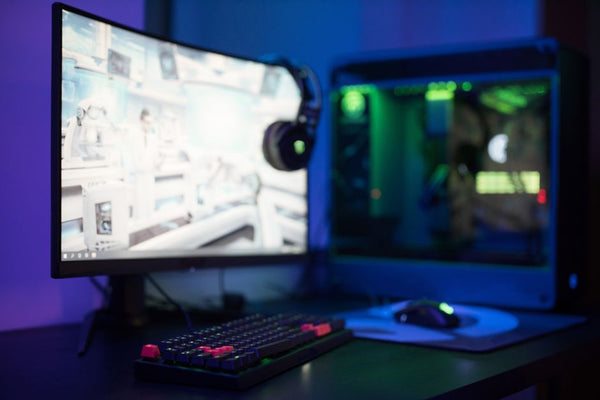
Here's something most reviews won't tell you – a monitor like this changes your entire build requirements. You can't just slot this into any gaming setup and expect magic.
Your DisplayPort cable matters. Your GPU's DP version matters. Your motherboard's PCIe lanes matter if you're running multiple high-end GPUs. Even your power supply needs to handle the increased load from pushing higher frame rates consistently.
When someone asks me about high-end monitor upgrades, the first question isn't "which monitor?" It's "what's your current system?" Because there's no point buying a Ferrari monitor for a Honda Civic PC.
If you're considering a premium gaming monitor upgrade, make sure your system can actually take advantage of it. Build your custom gaming PC with BitCrate to ensure component compatibility.
Pricing Reality and Market Competition
Samsung hasn't announced pricing yet, but let's be real – this isn't going to be cheap. Their current 32-inch QD-OLED gaming monitors run $1,200+. This new panel with 360Hz and improved specs? We're probably looking at $1,500-2,000.
At that price point, you're competing with OLED TVs that offer better HDR, larger screens, and similar gaming performance. Sure, they don't hit 360Hz, but do you really need it? LG's C3 OLED in 48-inch offers incredible gaming performance at around $1,000.
The math gets weird when monitor prices approach high-end TV territory. Bigger screen, better HDR, similar input lag – TVs start looking pretty attractive for gaming setups.
The Future-Proofing Question
Will this monitor still be relevant in 3-5 years? That's the million-dollar question, isn't it?
Display technology moves fast. MicroLED is coming. Better quantum dot implementations are in development. AMD and NVIDIA are pushing new display standards constantly. Dropping serious cash on current-gen tech always feels risky.
But here's my take – if you're buying for current performance, this Samsung panel delivers. If you're buying for future games that don't exist yet, you're basically gambling. Buy for today's needs, not tomorrow's maybes.
Samsung's new 360Hz QD-OLED panel represents the current peak of gaming monitor tech, but peak doesn't always mean practical. For most gamers, it's solving problems they don't have while creating new ones they can't afford. The real winners? Competitive players with unlimited budgets and content creators who can write off the expense. Everyone else should probably wait for prices to drop or consider whether 240Hz at 1440p might actually provide better real-world gaming experiences. Sometimes the bleeding edge cuts both ways.






Leave a Comment