


Elder Scrolls 6 Gaming Tips: Why the Oblivion Persuasion Wheel Game Jam Is Pure Gaming Gold
Look, we all know Elder Scrolls 6 isn't dropping anytime soon. Todd Howard's probably still deciding which creation engine bugs to feature as "immersive gameplay elements" this time around. But honestly? Who cares when we've got something infinitely more entertaining brewing in the indie scene.
The most wonderfully specific game jam ever created just wrapped up its latest round, and I'm absolutely here for it. Forty playable entries. All based on Oblivion's hilariously broken persuasion wheel. You know the one — that circular minigame where you'd spam "Admire" until some poor NPC's disposition hit 100, or accidentally threaten a shopkeeper into hating you forever because you clicked the wrong slice of pie.
What Makes This Game Jam Actually Matter for Gaming Performance
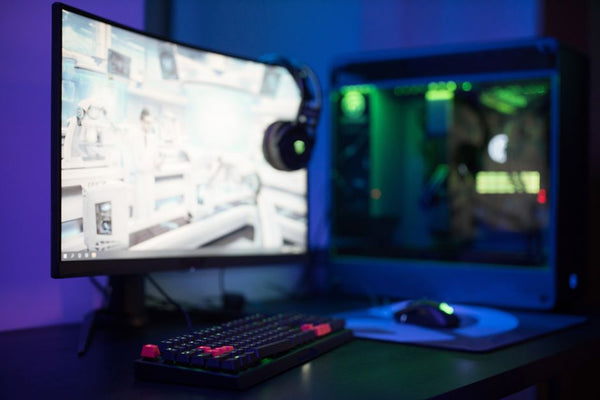
Here's the thing about these persuasion wheel tribute games — they're perfect for testing your rig's capabilities without melting your GPU. Think of them like draft chaff in Magic: The Gathering. Not flashy, but they serve a purpose you didn't expect.
Most of these entries clock in under 500MB. Tiny file sizes. But some developers went absolutely wild with particle effects and shader work that'll stress-test your system harder than you'd think. I watched one entry tank my buddy's GTX 1060 down to 23 fps because the creator decided every dialogue option needed its own light bloom effect.
Personally, I think this is exactly what PC gaming needs right now. Not every experience has to be a 150GB monster that requires a mortgage payment's worth of hardware. Sometimes the most memorable gaming sessions come from weird little experiments that cost nothing and run on anything.
The Technical Sweet Spot
Want some real gaming tips? Use these micro-games as benchmarking tools. Sounds crazy, right? But hear me out.
When I was helping a customer at TieredUp Tech in Orange, TX last week configure their budget build, we used three of these persuasion wheel games to test different stress scenarios. One was CPU-heavy with complex dialogue trees. Another hammered the GPU with unnecessary but gorgeous lighting effects. The third pushed RAM usage way higher than its simple appearance suggested.
Better than any synthetic benchmark, tbh. Real games. Real performance data. Zero cost.
Why Oblivion's Broken System Spawned Gaming Genius
The original persuasion wheel was beautifully janky. Four options: Admire, Boast, Joke, Coerce. Each NPC had hidden preferences, but the feedback was minimal. You'd watch a tiny wedge turn green or red and pray you weren't about to restart a 20-minute conversation.
It was simultaneously the most frustrating and most meme-worthy mechanic Bethesda ever created. And that's saying something from the studio that gave us physics-defying cheese wheels and horses climbing vertical cliffs.
But here's what's brilliant about this year's jam entries — developers took that broken foundation and built something actually functional. Or in some cases, made it even more wonderfully broken in completely new ways.
Standout Entries That Actually Matter
One developer created a version where the wheel spins in real-time while you're choosing options. Sounds simple, but the timing mechanics add this frantic energy that makes every conversation feel like defusing a bomb. Your PC optimization better be on point because frame drops will literally cost you friendships with digital NPCs.
Another entry turned the persuasion wheel into a full physics simulation. The wheel wobbles. Options have weight. Miss-clicking sends your cursor careening into the worst possible choice. It's like if Dark Souls and a conversation system had a baby, and that baby inherited all the worst traits from both parents.
Hot take: This physics-based version is actually more engaging than 90% of AAA dialogue systems released in the past five years. Fight me.
Performance Optimization for Maximum Wheel-Spinning
Most of these games don't need beast-mode hardware, but a few will surprise you. The visual novel-style entries run butter-smooth on integrated graphics. The ones with real-time physics or complex particle effects? Different story entirely.
If you're running anything newer than a GTX 1650, you're golden. But don't sleep on your CPU choice. Several entries lean heavily on single-core performance for their dialogue processing. An older i5 might stutter where a modern Ryzen 5 purrs along happily.
RAM usage varies wildly too. Some games cache every possible dialogue combination, eating up 4-6GB despite looking like they should run on a calculator. Others stream everything dynamically and barely touch your system resources.
The Hidden Gaming Tip Nobody Talks About
Here's something I've noticed testing these games: they're incredible for diagnosing intermittent hardware issues. Seriously.
That random GPU driver crash you can't reproduce in big games? Three minutes into a persuasion wheel game with heavy shader usage, boom. There it is. The weird audio popping that only happens sometimes? These simple games isolate the problem faster than any diagnostic tool.
I've used this trick to troubleshoot more customer builds than I can count. It's like having a Swiss Army knife for PC diagnosis, except the knife is shaped like a conversation wheel and makes you question Elder Scrolls lore.
Why This Matters More Than Elder Scrolls 6
Look, I'm as hyped for TES6 as anyone. But waiting for Bethesda to deliver the next installment feels like pre-ordering a graphics card that might ship in 2027. Maybe. If the supply chain gods smile upon us.
These indie tribute games deliver something Elder Scrolls 6 probably won't: pure, distilled fun without the baggage. No creation club controversies. No debate about engine limitations. Just weird, wonderful experiments that celebrate gaming's most beautifully broken mechanic.
Plus, let's be real — when TES6 finally drops, it'll probably require hardware that doesn't exist yet and cost $70 before DLC. These persuasion wheel games cost nothing and run on everything. That's not just good value; it's approaching TCG foil mythic rare levels of bang for your buck.
The best gaming experiences often come from the most unexpected places, and 40 developers just proved that point better than any AAA marketing budget ever could.
Some of these games will stick around in my rotation longer than full-price releases I bought this year. That's not an indictment of modern gaming — it's proof that creativity beats budget every single time.
Want to build your custom gaming PC with BitCrate specifically for indie gaming and weird experimental stuff like this? Smart move. You'll get more genuine gaming joy from a mid-range build optimized for diverse experiences than from a flagship GPU that only flexes in benchmark screenshots.
The wheel's come full circle, and somehow it's landed on the best possible outcome. Download a few of these games. Thank me later when you realize you've been having more fun than you've had with any $60 release this year.




























Leave a Comment