


This Hand-Embroidered Medieval Game Will Destroy Your Sleep Schedule (Gaming Tips Inside)
Remember when I thought Stardew Valley would be a "quick, relaxing game" to unwind after long shifts at our shop in Orange, TX? Yeah. That was three years and 400 hours ago. Now I'm staring at Scarlet Deer Inn dropping next month, and honestly? I'm getting those same dangerous vibes all over again.
This hand-embroidered medieval adventure looks absolutely precious on the surface. The art style screams "cozy Sunday afternoon with tea." The premise—running a medieval inn while uncovering local mysteries—sounds perfectly chill. But here's my warning: don't let that wholesome exterior fool you. This thing's going to be digital crack.
Why "Cozy" Games Are Actually Gaming Performance Destroyers
Let's talk about what these supposedly relaxing games actually do to your system. Sure, they might not push your RTX 4080 to its limits like Cyberpunk 2077, but they'll absolutely wreck your CPU with all those background calculations. Every villager has schedules. Every item has durability. Every relationship has branching dialogue trees that your processor needs to track constantly.
I learned this the hard way when a customer brought in their "budget build" because it was stuttering in Animal Crossing. Animal Crossing! Turns out their ancient dual-core CPU couldn't handle Tom Nook's capitalist empire efficiently. The game was running, but those micro-stutters during transitions? Pure torture.
Scarlet Deer Inn's hand-embroidered aesthetic suggests even more complex systems running underneath. Those detailed textures don't render themselves, and that medieval atmosphere requires serious attention to lighting and shadow work.
The Real System Requirements Nobody Talks About
Want some actual gaming tips? Here's what these "cozy" games really demand:
Your RAM usage will creep up steadily as the game world expands. Start with 16GB minimum. Seriously. These games are memory hogs disguised as minimalist experiences. That beautiful hand-stitched world needs to stay loaded in memory for seamless transitions between inn management and exploration.
Storage speed matters more than you think. When you're constantly moving between different areas—your inn, the village, surrounding forests—you want those loading screens invisible. An SSD isn't optional here; it's essential for maintaining that "relaxing" flow state.
PC Optimization for Maximum Medieval Immersion
Hot take: most people completely botch their settings for these atmospheric games. They crank everything to ultra because "it's not demanding," then wonder why their system sounds like a jet engine during quiet inn moments.
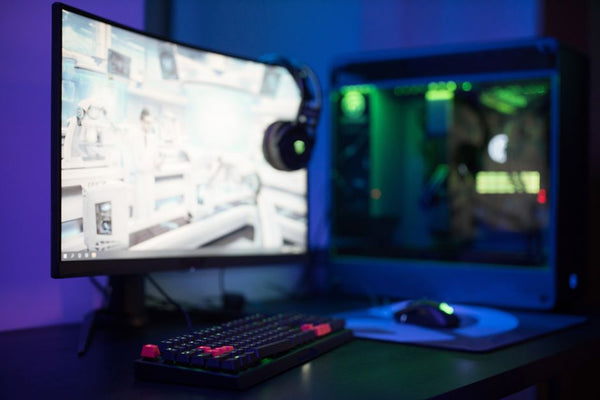
Here's what actually matters for Scarlet Deer Inn's style of gameplay. Texture quality should be your priority—those hand-embroidered details deserve crisp rendering. But anti-aliasing? You probably don't need 8x MSAA for a stylized art style. Dial it back to 2x or 4x and save those frames for smoother character animations.
Shadow quality is where things get tricky. Medieval settings live and die by their atmosphere, and atmospheric lighting requires decent shadow rendering. Don't cheap out here, but you also don't need every blade of grass casting perfect shadows. Find that sweet spot between "looks amazing" and "doesn't cook your GPU."
Pro tip: Enable V-Sync for these types of games. Screen tearing during peaceful inn management moments is absolutely jarring and kills the whole vibe.
The Time Trap Nobody Warns You About
Why am I really warning you about Scarlet Deer Inn? Because these games are designed to be addictive in the sneakiest possible way. No jump scares, no adrenaline rushes, no competitive rankings. Just... one more guest to serve. One more mystery clue to investigate. One more room upgrade to complete.
I've watched customers lose entire weekends to games like this. They boot up their carefully optimized system—maybe something they built with BitCrate for "serious gaming"—and end up spending 12 hours arranging virtual furniture and chatting with NPCs about medieval politics.
The hand-embroidered art style makes it worse because everything feels so intentional and detailed. You start noticing tiny stitching patterns on character clothing. You appreciate the way candlelight flickers across embroidered tapestries. Before you know it, you're completely absorbed in a world that feels handcrafted with love.
Setting Boundaries Before Scarlet Deer Inn Releases
Personally, I think the best gaming tip for Scarlet Deer Inn isn't about graphics settings or frame rates. It's about self-control. Set a timer. Seriously. These games don't have natural stopping points like competitive matches or story chapters. They just... flow.
Configure your system properly, sure, but also configure your willpower. Because that "lovely, chill time" you're expecting? It's going to turn into a medieval hospitality empire that consumes your entire February.
Will I be playing Scarlet Deer Inn when it drops next month? Absolutely. Am I already clearing my schedule and warning my coworkers I might be useless for a few days? You bet. Sometimes the most dangerous games are the ones that look completely harmless.
Just don't say I didn't warn you when you're googling "how to optimize inn layout efficiency" at 3 AM on a Tuesday.


















Leave a Comment